
Upholstery Cleaning Service Cost Near Me: Full Guide

August 14, 2026

This is a subtitle for your new post
Faded fabric and hidden dust mites ruin the comfort of your favorite living room sofa. Daily use grinds skin oils and allergens deep into furniture fibers, making regular maintenance essential for a healthy home.

Schedule your Maple Valley upholstery cleaning today at (253) 499-1028.

The upholstery cleaning service cost near me usually ranges from $100 to $350 per piece, depending on the furniture size and fabric type. Trained teams clean sofas, loveseats, sectionals, and chairs using proven methods like hot-water extraction and low-moisture cleaning. These deep cleaning services remove deep-down dirt, body oils, pet dander, and tough stains that regular home vacuuming cannot reach. Highly trained expert care is also safe for delicate fabrics like velvet or microfiber. For complete home care, explore the professional upholstery cleaning services by Tubro, which restore and protect your home's fabric furniture. Booking local experts keeps your furniture fresh, clean, healthy, and safe for your entire family.

Before you hire a local cleaning team, you likely want to know what items they can actually refresh. Understanding what professional upholstery cleaning actually cleans is the best first step to get the most value for your home. The path begins here.

What Does Professional Upholstery Cleaning Actually Clean?

When you look for a trusted upholstery cleaning service to care for your home, you might wonder what the process actually cleans. A professional cleaning does more than just wipe the surface of your living room couch. It reaches deep into the fibers of many fabric furniture pieces, such as sofas, loveseats, chairs, sectionals, and ottomans. It also covers fabric headboards, dining chairs, and accent pieces. Professional care removes deep-down dirt and spills that daily vacuuming simply cannot reach.
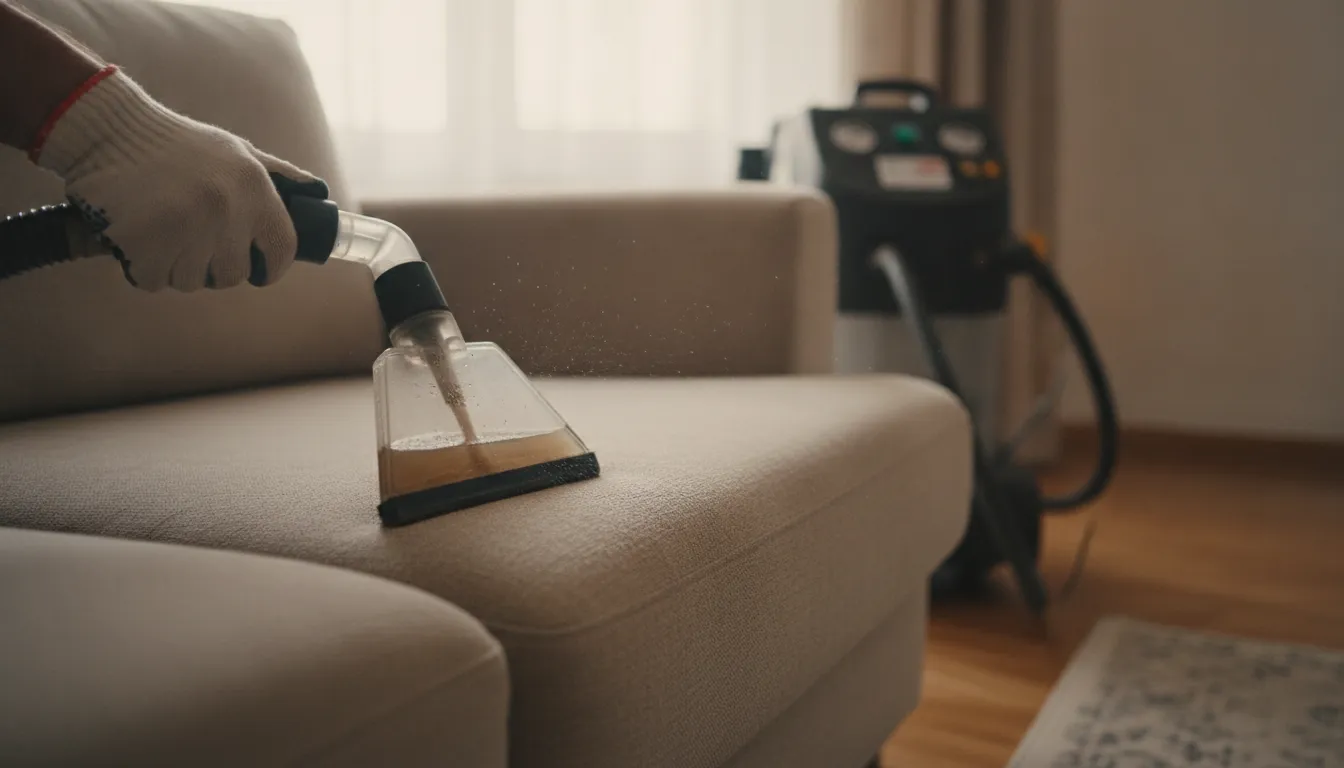
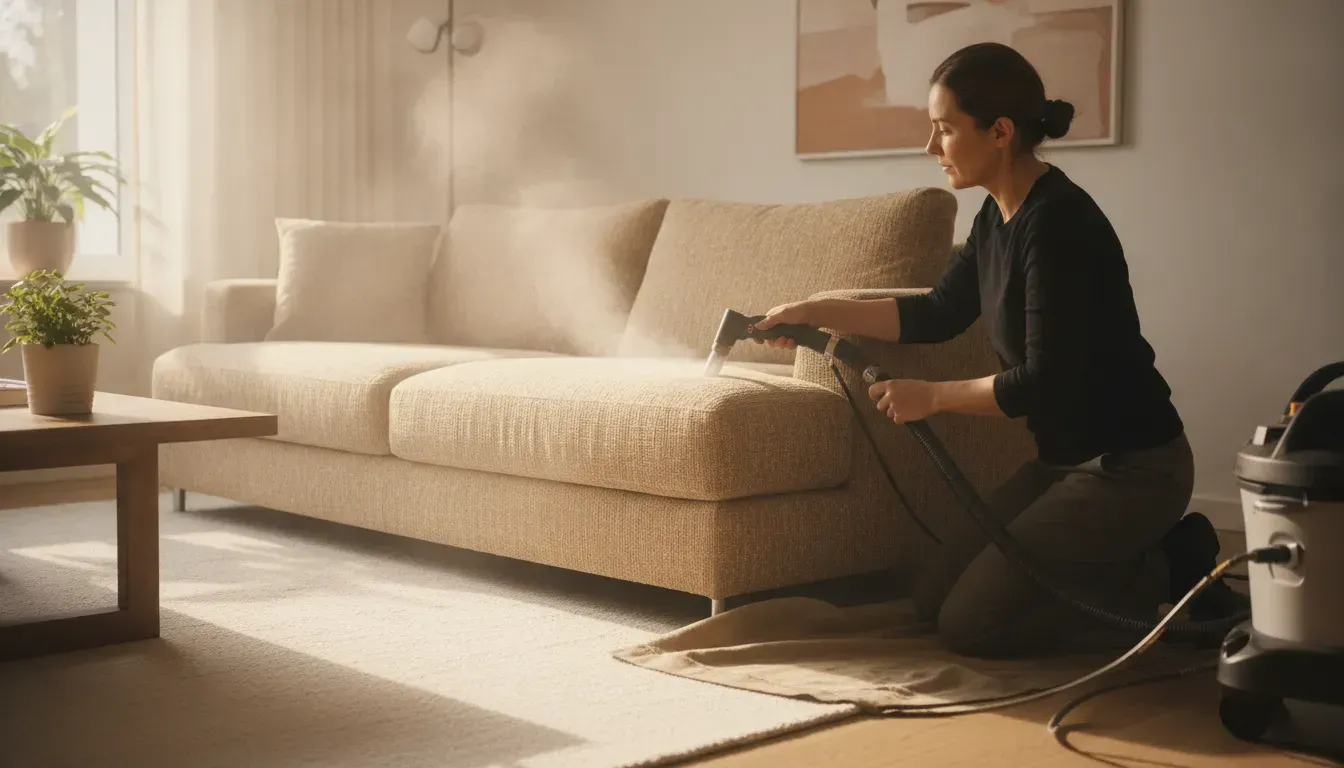
Tubro Carpet Cleaning technician deep cleaning a soft gray fabric sofa using a professional hot water extraction wandCommon household furniture we clean

To an IICRC Master Textile Cleaner, every piece of furniture has its own fabric type and needs special care. Whether you have a large sectional in your family room or fine dining chairs, professional cleaning covers them all. We also clean accent furniture, upholstered bed frames, and footstools. If you search for an upholstery cleaning service cost near me, you will see that rates depend on the size of each piece. For instance, institutional guidelines from UCLA Facilities show that rates for sofas and loveseats are priced per item rather than by square footage. This per-piece rate makes the service clear and upfront.

Deep-seated soils and microscopic allergens

Furniture fabrics act like giant filters in your home. They trap dust, pet dander, dead skin cells, and pollen from the air. Over time, these soils sink deep into the cushions where a standard household vacuum cannot reach. When people sit on the furniture, these allergens get puffed back into the air. Professional hot water extraction pulls these tiny soils out from the deep padding of your chairs.

Removing these deep allergens is vital for clean indoor air. According to the U.S. Environmental Protection Agency, small pests like dust mites and pet dander can trigger allergies and health issues. Vacuuming helps, but it only cleans the very top layer. A professional deep clean uses heated water and extraction to wash the fabric and remove the soils fully. This process keeps your home fresh and helps your furniture last much longer.

Summary: Professional upholstery cleaning removes deep-seated dirt, dust, and pet dander from all types of fabric furniture. Vacuuming only cleans the surface. Hot water extraction flushes out tiny allergens from deep within the fibers to keep your indoor air clean and your home fresh.

Sofa, Loveseat, and Chair Cleaning: What to Expect From the Process

When you look up an upholstery cleaning service cost near me, knowing the exact work steps helps you see the value. Professional cleaning is much more than just vacuuming and spraying. Dirt, pet dander, and body oils settle deep into the fibers over time. A standard household vacuum cannot reach these hidden soils. Our field standards follow strict rules to ensure your furniture is clean and safe.
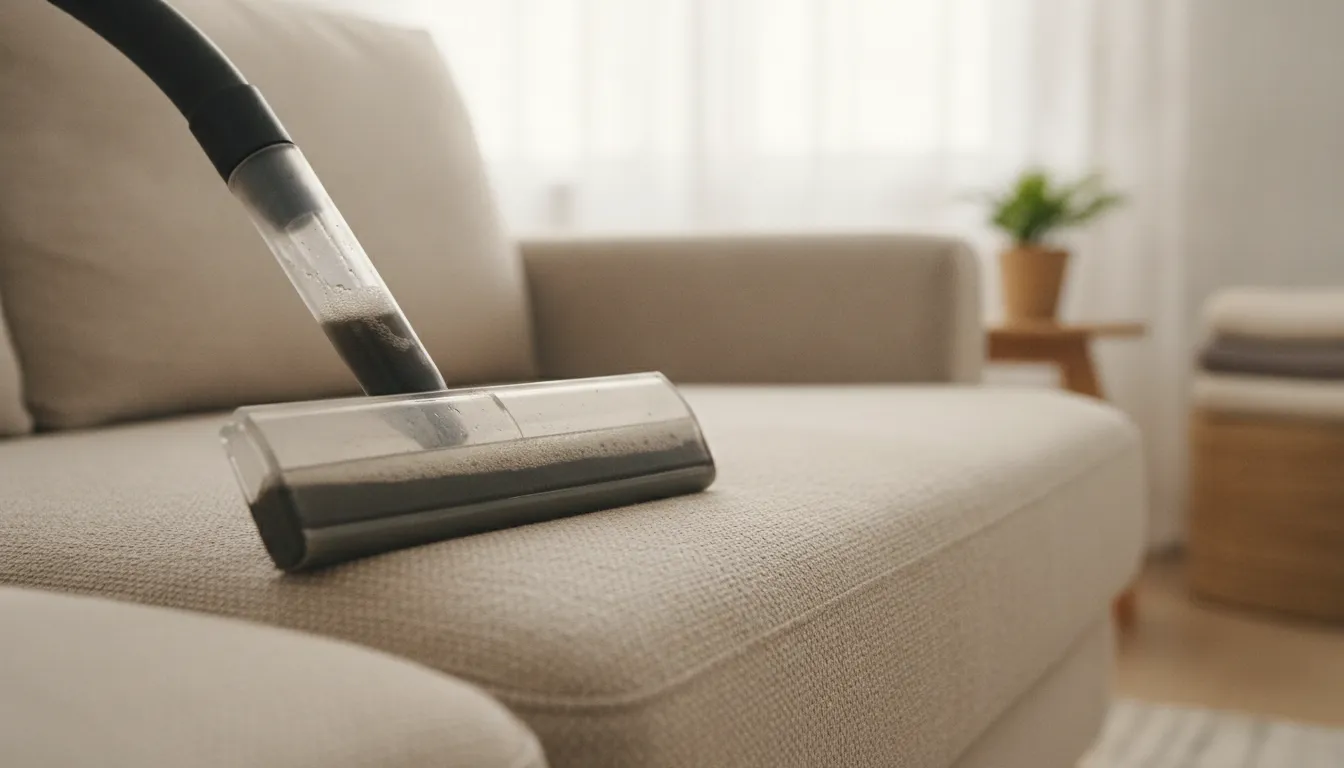
Professional upholstery cleaning wand removing dirt and water from a fabric sofa cushionThe professional cleaning sequence

A standard service covers many stages. First, our team looks closely at the fabric to check the code and search for tough stains. Our team checks the fabric type to pick the safest soap and water heat. Next, we use special steps to treat the fibers without causing damage.

  1. Dry soil dusting and vacuuming. We vacuum every inch of the piece to remove loose dust, pet hair, and crumbs from deep folds. This step prevents dry dirt from turning into mud during the wet cleaning phase.
  2. Pre-treating the fabric. We apply an eco-friendly pre-spray to break up deep body oils and dirt. This non-toxic spray is safe for kids and pets but tough on grease.
  3. Brushing the fabric. Our team uses a soft brush to gently rub the pre-spray into the fibers and loosen stubborn dirt. This step helps the cleaning agent work deep into the fabric weave.
  4. Hot-water extraction rinse. We use a special rinse tool to flush out the dirt and the pre-spray, leaving the fabric clean and free of soap. The tool pulls out the dirty water right away so the padding stays dry.
  5. Speed drying. We use high-speed air movers to cut down drying time so you can use your furniture sooner. Proper airflow is the key to stopping damp smells and moisture buildup.

Drying and fabric care

Drying times depend on the fabric type and the cleaning method used. Standard deep cleaning methods often need six to twelve hours to dry fully. But when using our advanced fast-dry system, your sofa, loveseat, or chair can dry in just four to six hours. This fast-dry method helps prevent mold and keeps your home fresh.

To keep your home running smoothly, many public places follow the same high standards. For example, the UCLA Facilities Services team prices upholstery cleaning by the piece to ensure clear rates. For other deep care needs, review the upholstery cleaning services Tubro offers. Choosing a trained team means you get a reliable professional upholstery cleaning that protects your family and pets.

In short, the professional cleaning process uses a deep dry vacuum, pre-spray, gentle brushing, and hot-water extraction to leave your furniture spotless. This safe method dries in about four to twelve hours, making your sofa and chairs clean and fresh.

How Much Does Upholstery Cleaning Service Cost Near Me?

When you want to clean your furniture, cost is a key detail to know. Hiring a local expert for upholstery cleaning helps keep your home fresh and clean. Standard prices often depend on the size of the piece and the fabric type. Let us look at what you can expect to pay for this service.

Average cost ranges per piece

Most home owners pay between $138 and $247 for an expert clean. On Yelp, most quotes range from $100 to $250 for standard jobs. For office spaces, some charges are lower. Public rates show office side chairs at $10.00 and executive chairs at $14.00, based on UCLA pricing data. Large pieces of furniture like sofas cost more because they take more time to clean.

To help you plan, we have listed the typical costs for common furniture below. These are usual national rates for standard cleaning jobs.

Furniture PiecePrice RangeMain Cost FactorsArmchair or Accent Chair$40 to $70Fabric type and cushion size.Loveseat$75 to $100Unit size and soil buildup.Standard Sofa (7-Foot)$135 to $160Fabric type and stain spots.Large Sectional$190 to $250Number of pieces and pet odor.

Primary factors that change the price

A few main details affect your final bill. First, the size and shape of your furniture play a big role. Larger items need more time and product to clean.

Second, the fabric type changes the method. Some delicate fabrics need dry cleaning. Other fabrics can handle hot water. Special care for velvet or silk often costs more.

Third, soil levels and pet odors can raise the price. If you have pet spots, you may need a special treatment. For complex issues, check Tubro's upholstery cleaning services. A deep clean takes more effort than a quick touch-up.

Tubro pricing policy and visit minimums

At Tubro, we believe in clear and honest pricing. For simple jobs, public records like the UCLA pricing list show rates of $75.00 for a loveseat and $85.00 for a sofa.

Most pro cleaners also have a minimum visit charge. This charge covers travel and setup costs. This is common for fee-based work as noted by UCSB custodial services. Our minimum visit charge is about $60.00 to bring our truck to your home.

We do not give exact quotes over the phone without seeing the item first. An in-person check lets us inspect the fabric and soil level. This ensures we give you a fair and correct price. Our team is ready to help you refresh your home.

The cost to clean upholstery near you depends on furniture size, fabric, and soil level. Standard couches run about $135 to $160, while sectionals cost more. Most local jobs have a $60 minimum fee. A professional in-person check gives you the most precise and honest price quote for your home.

How Often Should You Have Your Furniture Professionally Cleaned?

Most homes need deep fabric care on a regular schedule. Clean furniture looks good and helps keep your indoor air clean. For most households, scheduling a professional service every twelve to eighteen months is best.

Standard Home Frequency: Twelve to Eighteen Months

For a standard home with normal use, a professional deep clean every twelve to eighteen months works well. This routine prevents dirt from settling deep into fabric fibers. Over time, dust and body oils build up on your seats and backs. This buildup wears down the fabric and makes it look dull.

Expert textile care is more than just a quick cosmetic fix. For example, the team at UCSB Facilities Management treats deep upholstery cleaning as a specialized task. They do this because deep fabric care needs special tools and methods. Regular care from an expert team keeps your home clean and makes your furniture last longer.

When to Clean More Often: Kids, Pets, and Allergies

Some homes need more frequent visits from a cleaning team. If you have active kids or pets, you should schedule a cleaning once or twice a year. Pets track in dirt, shed hair, and leave dander on every cushion. Spills and sticky residue from kids can also damage fabric fibers if left too long.

Allergy sufferers also benefit from twice-yearly care, since dust mites and pollen collect in cushions. Deep steam cleaning removes these allergens much better than a home vacuum. While trying to budget for maintenance, you might search for an upholstery cleaning service cost near me to find local options. Regular care keeps your home healthy without breaking the bank.

Signs It Is Time to Schedule Service

Sometimes you do not need to wait for a calendar date to call a pro. Your furniture will often show you when it needs help. You should watch for clear signs that your couches and chairs need a professional upholstery cleaning.

Watch for these signs in your home:

  • Visible soiling: Dark spots, dingy arms, or grey areas on the cushions.
  • Lingering odors: Sour smells or pet scents that do not go away.
  • Allergy flare-ups: More sneezing, watery eyes, or coughing when you sit down.
  • High-traffic rooms: Rooms where family and guests gather every day.

Takeaway: Most homes should get professional upholstery care every twelve to eighteen months. Households with kids, pets, or allergies should schedule a clean more often. Watch for bad smells, dark spots, and allergy symptoms to know when to call a local pro.

Is Upholstery Cleaning Safe for All Fabric Types, Including Microfiber and Velvet?

When you look for an upholstery cleaning service cost near me, fabric safety is a main concern. Professional cleaning is safe for almost all fabric types when done right. An IICRC-trained technician will inspect your furniture before they start. This fabric check helps the cleaner choose the right method for each piece.

How Professionals Read Fabric Cleaning Codes

Every piece of furniture has a care tag with a cleaning code. These codes show the tech which cleaning products are safe. Water-based solutions are safe under code 'W'. Code 'S' means only dry-cleaning solvents can be used. Code 'S/W' allows either method, while code 'X' means you must only vacuum the fabric.

Synthetics like microfiber and polyester are very tough but still need proper care. Microfiber is often code 'W' or 'S'. A professional cleaner uses a gentle pre-spray and mild extraction to pull out deep dirt. This deep cleaning removes stains without harming the soft feel of the fibers.

Cleaning Delicate Materials Like Velvet and Cotton

Delicate fabrics need a lighter touch to avoid shrinking or color bleeding. Water and heat can easily harm velvet, wool, and cotton. The tech always tests them first. For dry-clean-only fabrics, they use specialized dry-cleaning methods that protect the pile from flattening.

Different fabrics need different tools and heat:

  • Microfiber and Polyester: These tough synthetics can handle water-based extraction under mild heat.
  • Velvet and Chenille: These luxury fabrics need low moisture and hand brushing to keep their soft feel.
  • Cotton and Wool: Natural fibers can shrink and need low heat with neutral cleansers.

Upholstery Cleaning Cost Tiers by Fabric Type

The type of material also affects the cost to clean your furniture. Standard synthetic pieces are the easiest to clean and fall into the lowest price tier of about $30 to $70. Mid-range fabrics like cotton and chenille cost about $90 to $250. Delicate fabrics like velvet, silk, and wool need specialized care, with cleaning rates running from $150 to $300.

To get a fair deal, look for a certified professional upholstery cleaning provider. Even large schools like UCLA Facilities use item-based pricing rather than flat rates. This shows how professional teams treat different furniture items with care. A skilled technician checks the fabric first to avoid fiber damage, shrinking, or color bleeding before they start the job.

In summary, professional upholstery cleaning is safe for all fabrics, including velvet and microfiber, when handled by an expert. Techs inspect each piece first. This fabric check ensures your furniture is cleaned without any risk of shrinking, color bleeding, or fiber damage.

Call Tubro Carpet Cleaning at (253) 499-1028 to book your professional upholstery cleaning today.

Frequently Asked Questions

How is the professional upholstery cleaning service cost near me calculated?

Most local pros charge by the piece instead of by square footage. The institutional price list from UCLA Facilities Services lists seventy-five dollars for a love seat and eighty-five dollars for a sofa. Your final cost depends on the fabric type, soil level, and piece size.

How long does it take for upholstery to dry after a professional cleaning?

Our advanced steam cleaning systems pull almost all water out of the fabric. Your furniture will be dry and ready to use in six to twelve hours. Running fans or opening windows will help the cleaned fabric dry even faster.

Can you remove pet stains and odors from couch cushions?

We can remove most fresh surface stains and pet odors with our safe treatments. But we never claim that we can remove pet urine odor one hundred percent. If urine gets deep into the inner foam cushion, full odor removal is not possible. Our team will check your furniture first to show you the best options.

Is your professional upholstery cleaning safe for pets and children?

Yes, we only use green, non-toxic products that are safe for your kids and pets. Our hot water steam clean removes deep dirt without leaving any harsh chemicals behind. We always put the safety of your home and family first.

Ready to Book Professional Upholstery Cleaning in Maple Valley?

Leaving dirt, dust, and body oils on your couch will slowly wear down the soft fabric fibers and ruin your favorite home furniture over time. Deep grime becomes much harder to remove the longer you wait to treat it, which often leads to costly fabric tears and bad mold odors. By booking our professional care today, our advanced quick-dry methods will have your clean chairs and sofas ready to use in just six to twelve hours.

Ready to refresh your living space with our safe, eco-friendly cleaning products? Call Tubro Carpet Cleaning at (253) 499-1028 to schedule your professional upholstery cleaning today. Our friendly local experts are here to help you preserve your favorite seats and keep your entire home fresh for your family.

The body content of your post goes here. To edit this text, click on it and delete this default text and start typing your own or paste your own from a different source.
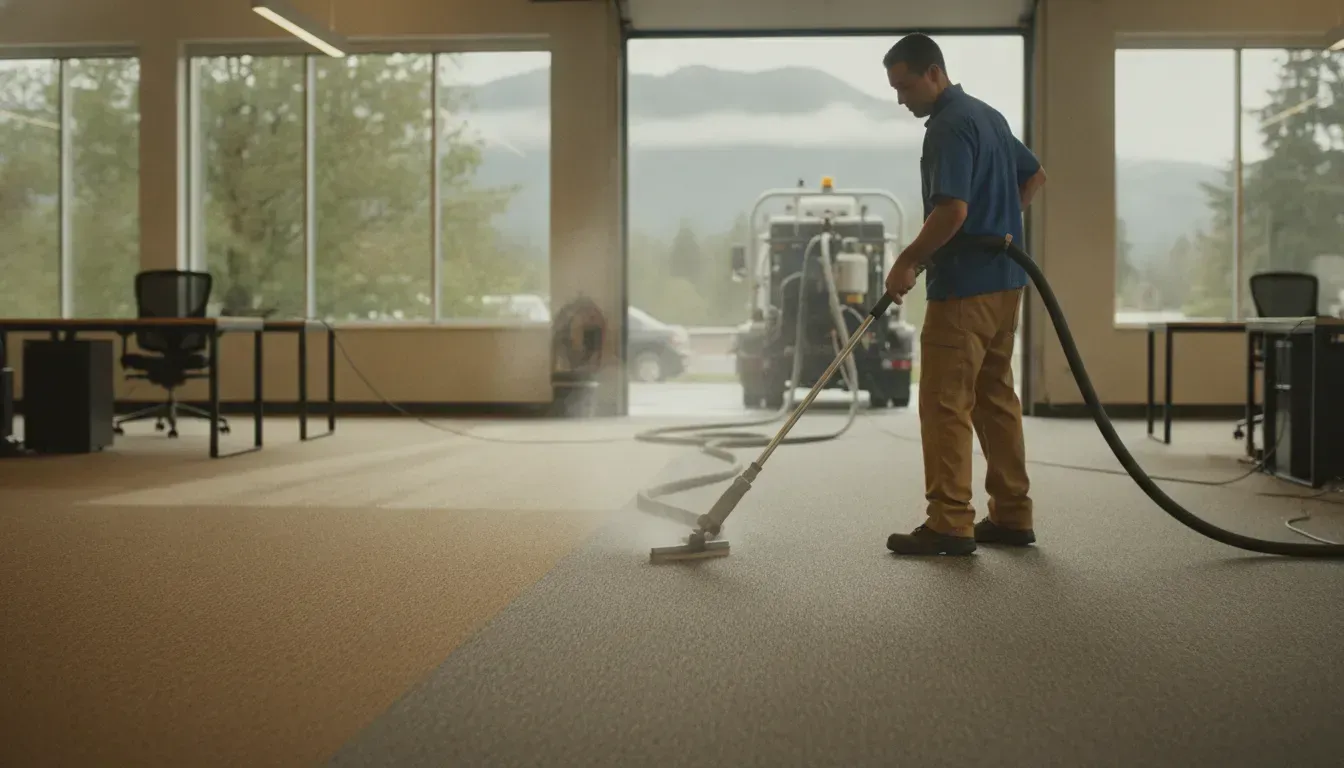
Commercial carpet cleaning cost per square foot in a Pacific Northwest office
By Ryota Nishino August 27, 2026
Learn the commercial carpet cleaning cost per square foot, quote factors, included services, and recurring planning guidance for offices and retail spaces.
Professional commercial carpet cleaning in a bright Pacific Northwest office
By Ryota Nishino August 27, 2026
How often should commercial carpets be cleaned? Get practical guidance by business type, traffic, weather, and carpet condition for offices and businesses.
Professional odor removal for carpet and upholstery in a Pacific Northwest home
By Ryota Nishino August 27, 2026
Professional odor removal carpet upholstery guidance for cooking, smoke, and musty smells. Learn how source assessment shapes realistic treatment expectations.
By Ryota Nishino August 14, 2026
Schedule your area rug cleaning professional service in South King County. Learn what to expect, what it costs, and how to protect your rug.
By Ryota Nishino August 12, 2026
Schedule affordable professional carpet cleaning today. See how much does professional carpet cleaning cost in Washington with Tubro's upfront pricing.
By Ryota Nishino August 5, 2026
Schedule spring carpet cleaning in South King County. Follow this room-by-room checklist for carpets, upholstery, and hard surface cleaning.
A person lies on a carpet surrounded by cleaning supplies, including a yellow bottle, blue spray, and cloths.
July 29, 2026
Carpet smells musty after cleaning? Learn the causes and what it means for Maple Valley, WA homes. Prevent and fix lingering odours.
By Ryota Nishino July 28, 2026
Schedule carpet cleaning for allergies Pacific Northwest homes. Learn how professional cleaning reduces dust mites, pollen, and mold.
Professional carpet cleaner using truck-mounted steam cleaning system in a bright Pacific Northwest home with fresh, clean carpets
July 24, 2026
Schedule professional move in move out carpet cleaning in South King County. Learn what landlords require and how to protect your deposit.
By Ryota Nishino July 21, 2026
Walking across damp carpets hours after a professional service can feel highly frustrating. Most homeowners want their floors back to normal as quickly as possible. Professional hot water extraction typically requires several hours to dry, but the exact window depends on multiple indoor conditions. Schedule your Maple Valley carpet cleaning today and get back to dry floors faster. On average, how long does carpet take to dry after cleaning ranges from 6 to 12 hours when using professional equipment. Standard industry cleanings can take 24 to 48 hours, but advanced extraction methods significantly reduce this waiting period. The total drying time depends heavily on your home humidity, air circulation, carpet fiber thickness, and the outdoor climate. Using truck-mounted extraction units pulls more moisture from deep within the fibers, allowing a much faster recovery. While you can walk on the carpet immediately with clean feet, leaving it to dry fully prevents fibers from matting or tracking fresh dirt. You can learn more about our process by visiting our pillar page on Residential Carpet Cleaning: What Every South King County Homeowner Should Know . While a half-day wait is typical, understanding the specific factors of your clean helps you plan your day. Our next section details the standard timeframe and how the cleaning method impacts your results. How Long Does Carpet Take to Dry After Cleaning: Hot Water Extraction Time Extractable Summary: Professional hot water extraction typically dries carpets in 6 to 12 hours. How long carpet takes to dry after cleaning depends on the method. Tubro Carpet Cleaning uses truck-mounted tools to hit the faster end of this range. Drying Times for Steam Cleaning Many homeowners want to know carpet drying time after cleaning before they book a visit. Hot water extraction, or steam cleaning, is the most common deep cleaning method. On average, this method takes about 6 to 24 hours to dry. You can read more about this in our guide on Residential Carpet Cleaning: What Every South King County Homeowner Should Know . While some standard jobs take a full day, Tubro uses quick-dry tools to get carpets dry in just 6 to 12 hours. This is much faster than the old industry standard of 24 to 48 hours. This fast dry time prevents issues like mold and keeps your home usable. Comparing Drying Times by Cleaning Method Different cleaning methods use different amounts of water, which changes how long carpet takes to dry after cleaning. For a three-room home, steam cleaning can use 15 to 20 gallons of water. Other methods use less water but do not clean as deep. Cleaning MethodTypical Drying TimeWater UsageHot Water Extraction (Steam Cleaning).6 - 12 hours (Tubro) / 6 - 24 hours (standard).15 - 20 gallons.Very Low Moisture (VLM).2 - 4 hours.2 - 3 gallons.Bonnet Cleaning.2 - 4 hours.Moderate.Encapsulation.1 - 2 hours.Low.Carpet Shampooing.6 - 10 hours.High.Dry Compound Cleaning.20 min - 1 hour.Minimal. Tubro uses high-powered extraction to give you the deep clean of steam cleaning with the fast dry times of low moisture methods. Why Extraction Power Matters The main key to fast drying is how much water the machine can pull out of the carpet. Standard rental units lack the power to lift heavy water. This leaves the backing damp for too long. Professional truck-mounted systems have strong pumps and vacuum blowers. They pull out almost all the wet solution, so your fibers dry fast and stay clean. This strong extraction keeps water from soaking deep into the pad underneath. Factors That Affect Drying Time: Humidity, Carpet Thickness, and Airflow How long does carpet take to dry after cleaning? The answer depends on your home environment and the equipment used. While professional hot water extraction is the best way to clean fibers, the moisture left behind must escape. Understanding the four main factors that control this drying window helps you prepare your home and get fast results. Every home has a unique climate that dictates the speed of water evaporation. Homeowners can influence some of these factors, like airflow, while others, like local weather, require planning. Professional cleaners use high-powered systems to address these variables during the service. Air Humidity and Regional Weather Air moisture plays a major role in how fast your floors dry. In areas with high humidity, like the Pacific Northwest, the air is often full of water vapor. This damp air has less room to hold more moisture, which slows down evaporation. Drier climates allow water to lift from the carpet fibers much faster. Local weather conditions mean you must adjust how you ventilate your home after a visit. Carpet Fiber Type and Thickness The type of carpet you have impacts how it holds water. Thick carpets with dense piles have more surface area and trap more moisture. Nylon and wool carpets have high wicking properties, meaning they hold onto water tightly. In contrast, polyester and olefin carpets dry much faster because they absorb very little water. Thick padding beneath the fibers also acts like a sponge, requiring deep extraction to prevent bottom-up dampness. Airflow and Room Ventilation Moving air is the key to fast drying. Stagnant air allows a layer of wet, heavy air to sit right above the carpet. This wet layer stops further evaporation. Running ceiling fans, turning on the HVAC fan, or opening windows creates air movement. This constant breeze carries the damp air away and replaces it with dry air. Moving air can cut how long carpet takes to dry in half. Extraction Quality and Equipment Power The final factor is the power of the cleaning machine itself. Truck-mounted systems use strong vacuums that extract the vast majority of the water. High-water extraction is highly effective, but it requires top-tier tools to remove the solution. For example, a three-room cleaning job can use 15 to 20 gallons of water. Heavy truck-mounted machines pull almost all of this out. Rental units or small portable tools lack this vacuum power. They leave carpets wet for 24 hours or longer, which increases mold risks. Choosing a professional team with high-power equipment is the best way to keep your drying time short. Expert technicians use optimized water levels and industrial vacuums to dry floors in hours rather than days. Extractable Summary: Drying times depend on room humidity, fiber thickness, airflow, and vacuum power. Truck-mounted extraction removes the most water from deep fibers for faster results. How Pacific Northwest Weather Affects Carpet Drying in Summer vs. Winter Pacific Northwest weather plays a major role in how long carpet takes to dry after cleaning. High outdoor humidity in Washington means drying times can vary depending on the season. To get your carpets back to normal quickly, you must adjust your drying plan based on the local weather. Extractable Summary: Pacific Northwest humidity changes carpet drying times between summer and winter months. Adjust your drying strategy based on the season. The Fast Dry Times of Summer Summer is the best season for fast drying in local homes. From June through August, outdoor humidity drops and warm air helps pull water from carpet fibers. During these dry months, you can open windows to let fresh breezes flow through your rooms. This natural airflow speeds up the process so you can walk on your floors much sooner. Many homeowners enjoy a typical carpet drying time of just six to twelve hours on warm summer days. Winter Drying Challenges Winter brings cold, rainy days that keep damp air trapped inside. Since you cannot open your windows during a cold Washington storm, moisture stays in the room much longer. Homeowners must rely on indoor heating and fans to move the damp air. Without proper heat and airflow, wet carpets can take up to twenty-four hours or more to dry. Cold air holds less moisture, so keeping your thermostat set to a warm temperature helps the water evaporate from the fibers. Seasonal Tips for Washington Homeowners To keep dry times short all year, use these simple tips based on the season: Summer tip: Open opposite windows to create a cross-breeze across wet rooms. Winter tip: Turn your home heating system up to seventy degrees to help water evaporate. Year-round tip: Run ceiling fans and portable floor fans to keep air moving. Content continues with tips for speeding up drying, quick-dry technology, FAQ, and CTA. What You Can Do to Speed Drying After Your Cleaning Appointment You can take simple steps to lower how long carpet takes to dry after cleaning. Good planning helps air move and clears dampness from your rooms. By using your home systems and household items, you can help your floors dry fast and safe. Our team sets up a solid start with high-powered extraction fans and optimized water usage during each job. But your actions at home keep this process moving after we leave. Follow these clear steps to get the best and fastest results for your clean floors. Simple Airflow and Climate Steps Turn on ceiling fans: Keep your ceiling fans running on high speed. Make sure they spin in a counterclockwise direction to push air down onto the wet floor fibers. Use portable floor fans: Set up small household fans in rooms with wet carpets. Point them down toward the damp areas to create constant air movement across the surface. This helps water lift away quickly. Open your windows when the weather is dry: If the outdoor air is warm and dry, open your windows a few inches. This lets fresh air enter and carries moist air out of your home. Do not open windows on rainy or highly damp days. Run your heating or cooling system: Set your HVAC system to a steady temperature. In cold months, turn your heat up to 70 degrees. In warm months, run your air conditioning. Both systems help pull moisture out of the air. Set up a dehumidifier: Place a portable dehumidifier in areas with slow airflow or high moisture. This device catches water from the air and keeps the room dry. It is very helpful in deep basements or closed rooms. Avoid moving heavy furniture back too soon: Keep your furniture off the damp carpet until it is fully dry. Metal or wood legs can stain wet fibers or rust. Leave protective pads under legs if you must place items back early. Walk only on the edges and keep off the main areas: Try to stay off the wet carpet as much as you can. If you must walk on it, wear clean socks and step only on the dry edges. Keep children and pets off the floors until they dry. Helpful Local Resources for Homeowners Taking care of your home floors is easier when you have the right local facts. For more tips on keeping your space clean and dry, read our guide on Residential Carpet Cleaning: What Every South King County Homeowner Should Know . Using these step-by-step methods keeps your home safe and ensures your clean carpet looks great for a long time. Why Quick-Dry Technology Matters for Busy Households Managing a busy home is a daily balancing act. When you schedule carpet care, you do not want to wait days for your floors to dry. Traditional carpet wash methods can leave fibers wet for 24 to 48 hours. Which shuts down key parts of your home and forces you to move your daily life around wet floors. Knowing how long does carpet take to dry after cleaning helps you plan. But choosing a service with advanced drying tools is the best way to avoid home stress. Call (253) 499-1028 today and experience a faster dry time with Tubro's professional cleaning. Extractable Summary: Tubro's quick-dry system dries carpets in 6 to 12 hours, well under the 24 to 48 hour standard. This keeps your home safe and fully usable. Less Disruption for Kids and Pets In a home with kids and pets, closed-off rooms cause major stress. Keep in mind that wet carpets are not just hard to walk on, but they also attract new dirt. Damp fibers act like a magnet for muddy paws and dirty socks, which can ruin your fresh clean. Tubro uses eco-friendly products safe for children and pets to ensure your family stays healthy. Our quick-dry tools cut drying times down to 6 to 12 hours, which means your family can get back to their normal routine on the very same day. A Safer Home Free of Mold When carpets stay damp for too long, they create a perfect spot for mold and mildew to grow. This risk is very high in areas with thick padding or deep carpet fibers. If moisture stays in your floors for 24 to 48 hours, spores can start to grow in the backing. According to the Environmental Protection Agency , mold can begin to grow on wet indoor surfaces in just 24 to 48 hours. By using high-powered truck-mounted water extraction, our team pulls most of the water out of the fibers to stop mold before it can ever start. Faster Setup for Heavy Foot Traffic A busy home has areas that see constant use, such as hallways and living rooms. Blocking these spaces for two full days is not practical for most families. You also have to wait to put your heavy furniture back in place, which keeps your home in a messy state. Fast drying times mean you can set up your rooms and walk on your floors again without delay. If you want to restore your floors with minimal stress, you can count on our team to provide top results with professional carpet cleaning services that fit your schedule. Frequently Asked Questions How long does carpet take to dry after professional cleaning? Most carpets dry in six to twelve hours after professional hot water extraction. However, the exact time depends on indoor temperature, airflow, and home humidity levels. Steam cleaning can take up to 24 hours to dry under poor conditions, while very low moisture methods dry in two to four hours. How can I speed up the carpet drying process after cleaning? You can dry your carpet much faster by increasing ventilation and airflow. Turn on your ceiling fans and place portable fans on the floor to blow air across the damp areas. Running your home heater or air conditioning unit also helps lower indoor humidity to pull moisture from the carpet fibers quickly. Is it normal for carpet to still be damp 22 hours after cleaning? Yes, but it is not ideal. While six to twelve hours is the common range, high indoor humidity or thick carpet fibers can cause dampness to last up to 24 hours. If your carpet remains damp after a full day, you should increase the airflow immediately by running fans to prevent mold growth and musty odors. What is the difference in drying time between steam and dry cleaning? Steam cleaning relies on hot water extraction and typically needs six to twelve hours to dry. Very low moisture methods like encapsulation use chemical compounds instead of heavy water to clean. Encapsulation dries in only one to two hours, while dry compound cleaning dries in about 20 minutes to one hour. Ready to Book Your Professional Carpet Cleaning? Damp carpets can disrupt your busy day and keep your family out of your favorite rooms. Waiting too long for carpets to dry can also let mold and mildew start to grow. If you book today, our team can help you get clean, fresh carpets that dry quickly so you can get back to your normal routine without the wait. Ready to get back to a clean home? Call (253) 499-1028 to schedule your professional carpet cleaning appointment.