
How Often Should Commercial Carpets Be Cleaned?
August 27, 2026
How often should commercial carpets be cleaned? Get practical guidance by business type, traffic, weather, and carpet condition for offices and businesses.
How often should commercial carpets be cleaned? Most businesses should plan professional service every 6 to 12 months, while high-traffic entries, halls, and lobbies often need attention every 3 to 6 months.
Schedule commercial carpet cleaning with Tubro Carpet Cleaning at (253) 499-1028.
The right interval depends on more than a calendar. Foot traffic, building use, weather, entryway design, carpet construction, soil loading, and manufacturer guidance all affect the schedule. A quiet private office and a busy retail entrance should not share the same maintenance plan.
For a broader service overview, see Commercial Carpet Cleaning for South King County Offices, Rentals, and Retail. This guide focuses on the scheduling question property managers and facility teams face after they identify the need for recurring care.
Short answer: Use 6 to 12 months as a general planning range for commercial carpet, then shorten the interval to 3 to 6 months for heavily trafficked zones. Inspect each area and follow the carpet manufacturer's instructions before setting the final schedule.
How Often Should Commercial Carpets Be Cleaned in High-Traffic Areas?
High-traffic commercial carpet usually needs professional cleaning every three to six months as a practical starting range. Entryways, hallways, reception areas, waiting rooms, and other heavily used zones collect soil faster than private offices or low-use rooms.
Key takeaway: High-traffic areas often need service every 3 to 6 months, but inspection and manufacturer guidance should determine the final interval.
That range is not a universal rule. A property manager should consider how many people cross each zone, what they track indoors, and how well routine maintenance controls dry soil. Wet weather can increase the amount of moisture and soil entering through doors. This matters in the Pacific Northwest, especially when walk-off mats are undersized, saturated, or poorly maintained.
Visible wear is a warning, not the first signal to schedule service. Once soil is ground into carpet, it can contribute to matting, crushing, and a worn appearance. The darker paths around a lobby or corridor may indicate that a zone has been carrying more traffic than the current schedule can handle.
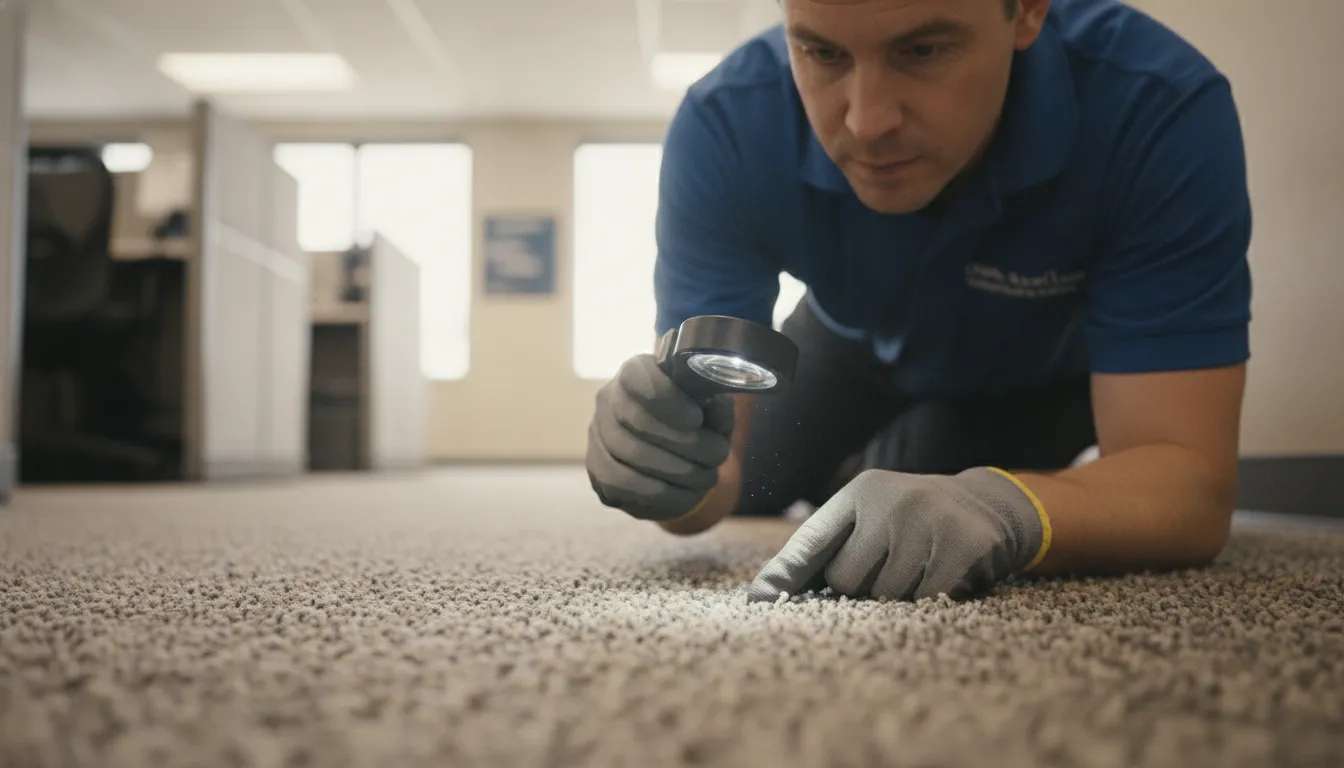 Manufacturer instructions still matter. Some carpet programs call for professional cleaning at least every 12 to 18 months for warranty maintenance. That interval may be a minimum documentation requirement, rather than the ideal schedule for a busy lobby or retail entrance.
The U.S. Environmental Protection Agency does not set one mandatory commercial carpet-cleaning frequency. It advises building owners and managers to follow manufacturer recommendations and recognized industry standards. See the EPA carpet-cleaning frequency guidance when building a maintenance policy.
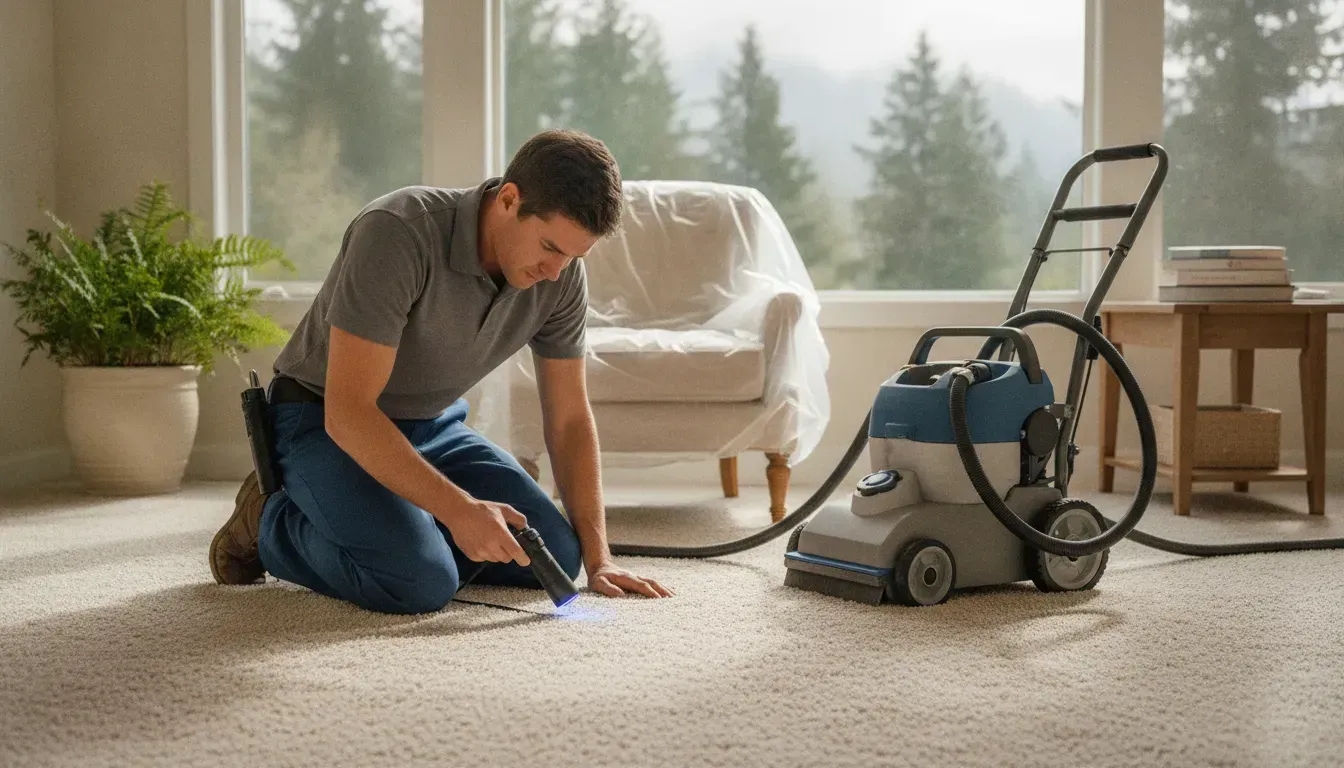
An IICRC-informed professional can help close the gap between a general guideline and a defensible plan. An inspection considers traffic lanes, dry soil, moisture entry, fiber condition, carpet construction, and the effectiveness of routine vacuuming.
Keep records of service dates, inspected areas, manufacturer requirements, and observed conditions. A simple record gives managers a shared reference when they compare traffic patterns, weather changes, and carpet appearance. Documentation also makes it easier to adjust one busy zone without unnecessarily disrupting the entire building.
In practice, three to six months is a reasonable planning range for heavily trafficked commercial carpet. Manufacturer guidance of 12 to 18 months may represent a minimum warranty interval. Inspection should determine the final schedule.
Cleaning Frequency Guidelines by Business Type
There is no single calendar that fits every commercial property. The right schedule reflects how people use the building, how much soil and moisture enter it, and the carpet's condition. Facility requirements and manufacturer guidance also matter.
Key takeaway: Business type sets a useful starting point, but the building's actual traffic, soil, moisture, and operational constraints set the finished schedule.
Commercial carpet cleaning considerations by business typeBusiness typeScheduling considerationsAreas to inspectOfficeSeparate low-use offices from busy reception and shared corridors. Plan around meetings and occupancy.Entrances, reception, corridors, break rooms, and conference roomsRetailCustomer flow, seasonal surges, shopping carts, and entryway moisture can increase soil loading.Doorways, checkout lanes, fitting areas, and high-use aislesRestaurantFood-service operations, spills, grease transfer, and closing schedules require careful coordination.Dining areas, waiting areas, service routes, and entrancesSchoolPlan work during breaks or closures when possible. Account for student traffic and room use.Entryways, hallways, classrooms, offices, and multipurpose roomsRental propertyTurnover timing and unit condition determine whether service is isolated or portfolio-wide.Vacant units, shared halls, stairs, lobbies, and laundry areas
Office and administrative spaces
Office managers should not treat a low-traffic conference room like a busy lobby. A building with mostly private offices may begin with a longer interval, while shared corridors, reception areas, and break rooms need closer observation.
Retail, restaurant, and public-facing spaces
Retail and restaurant managers should plan for customer surges, weather, and changing floor conditions. A short service window after closing can reduce disruption, but the provider still needs enough time for appropriate inspection and extraction.
Schools, rentals, and higher-risk environments
Schools can use breaks and closures to complete work with less interruption. Rental property teams may coordinate recurring service with tenant transitions. Healthcare facilities need coordination with infection-prevention and environmental-services leaders rather than a generic commercial interval.
For healthcare environments, the CDC describes risk assessment as a basis for determining environmental cleaning methods and frequency. Factors include contamination likelihood, population vulnerability, and surface contact. Review the CDC risk-assessment guidance with the responsible facility team.
Across all business types, routine vacuuming and effective entryway systems remain important between professional visits. Regular inspection reveals when high-use areas are being cleaned too late. The EPA does not set a mandatory commercial carpet-cleaning interval, so keep maintenance records and check warranty requirements before finalizing a plan.
How Foot Traffic Changes a Commercial Carpet Cleaning Schedule
Foot traffic is one of the clearest indicators of how quickly commercial carpet needs professional attention. A quiet private office, a busy lobby, and a retail entrance do not place the same demands on carpet.
Key takeaway: Measure traffic by zone, not only by building. The busiest routes should guide the schedule for targeted service.
Start by mapping the paths people use most. Mark entrances, corridors, elevators, reception desks, waiting areas, checkout lanes, and routes between shared amenities. These locations often need attention before the rest of the building because shoes bring outdoor soil and moisture inside.
Entryways deserve special attention. Mannington Commercial notes that a properly designed entryway system helps trap dirt and moisture near the door. Its guidance identifies a 10- to 15-foot entry zone as useful for capturing material before it reaches the wider floor. Use the manufacturer's installation and maintenance guidance for the specific carpet and mat system.
Traffic volume is only one part of the assessment. Consider the source of the traffic, the type of footwear, weather exposure, carts or wheeled equipment, and the amount of time people spend in each area. A smaller lobby may need more frequent attention than a large back office if nearly every visitor crosses it.
Routine vacuuming supports the professional schedule. It reduces dry soil before particles move deeper into the pile and gives staff a regular opportunity to notice changes. Vacuuming does not replace periodic professional cleaning, but it can help managers identify when the current interval is no longer keeping pace.
- Inspect entryways and corridors more often than low-use rooms.
- Track seasonal moisture and soil changes at exterior doors.
- Check whether mats are large enough, clean, and positioned correctly.
- Review traffic after tenant changes, renovations, events, or staffing changes.
- Record visible wear and adjust zones instead of treating the whole building identically.
A building-wide plan should be flexible. Some properties benefit from targeted service in high-use zones between broader cleanings. This approach can reduce disruption while keeping the most visible and heavily used areas on an appropriate schedule.
How to Build a Recurring Commercial Carpet Cleaning Schedule
A recurring schedule should reflect how the building operates, not follow a generic calendar. A thoughtful plan protects carpet while reducing surprises for staff, tenants, and visitors.
Key takeaway: Build the schedule from an inspection, divide the property into zones, coordinate service with operations, and review the plan after each visit.
Start with a baseline inspection. Record carpet type, visible wear, soil loading, moisture concerns, entry points, busy areas, access limits, and manufacturer requirements. If the property has several buildings or units, use the same record format for each location.
Next, divide the property into practical zones. A busy entrance may need a different interval from a private office. A rental portfolio may need a turnover plan for vacant units and a separate recurring plan for shared areas. This zoning prevents the lowest-traffic room from dictating the needs of the busiest route.
Review manufacturer guidance before setting the first service interval. The EPA advises following manufacturer recommendations and industry standards. It does not set a mandatory federal frequency. Follow the carpet warranty requirements and document the basis for the schedule.
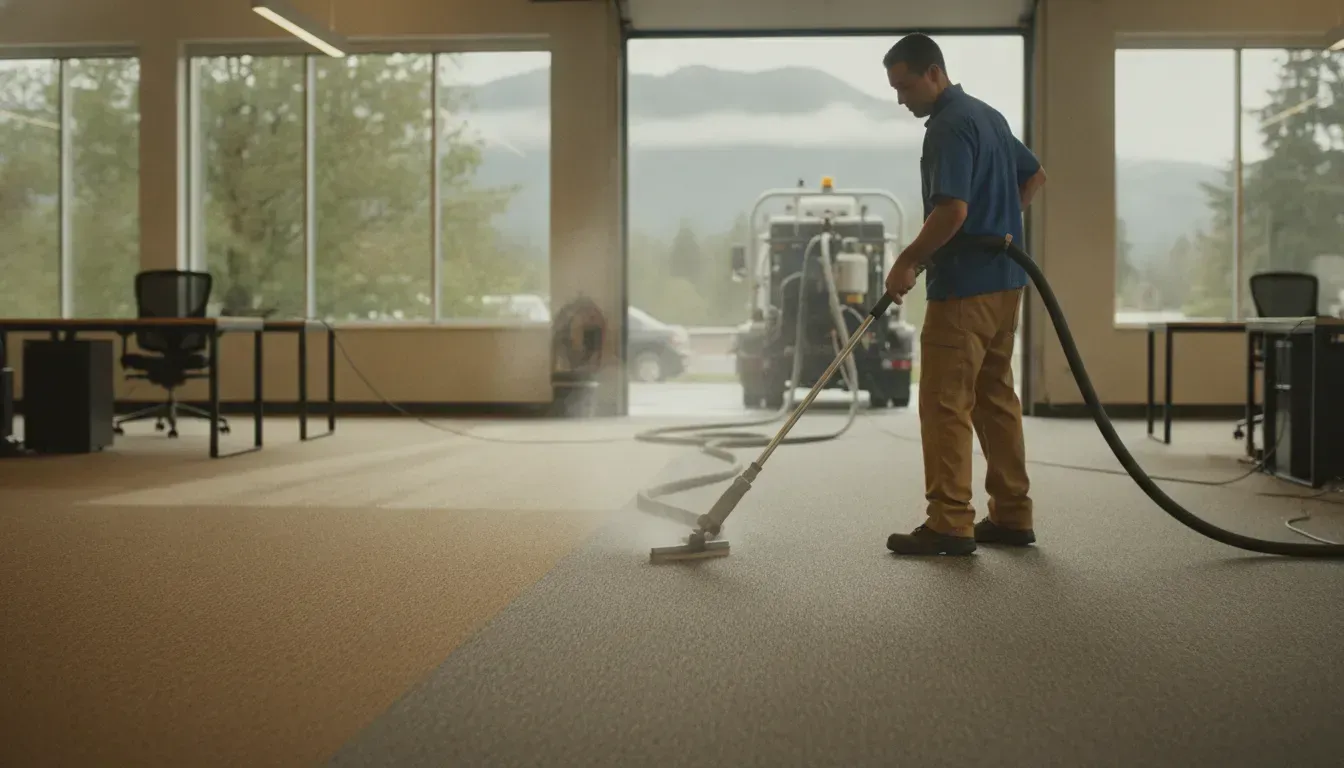
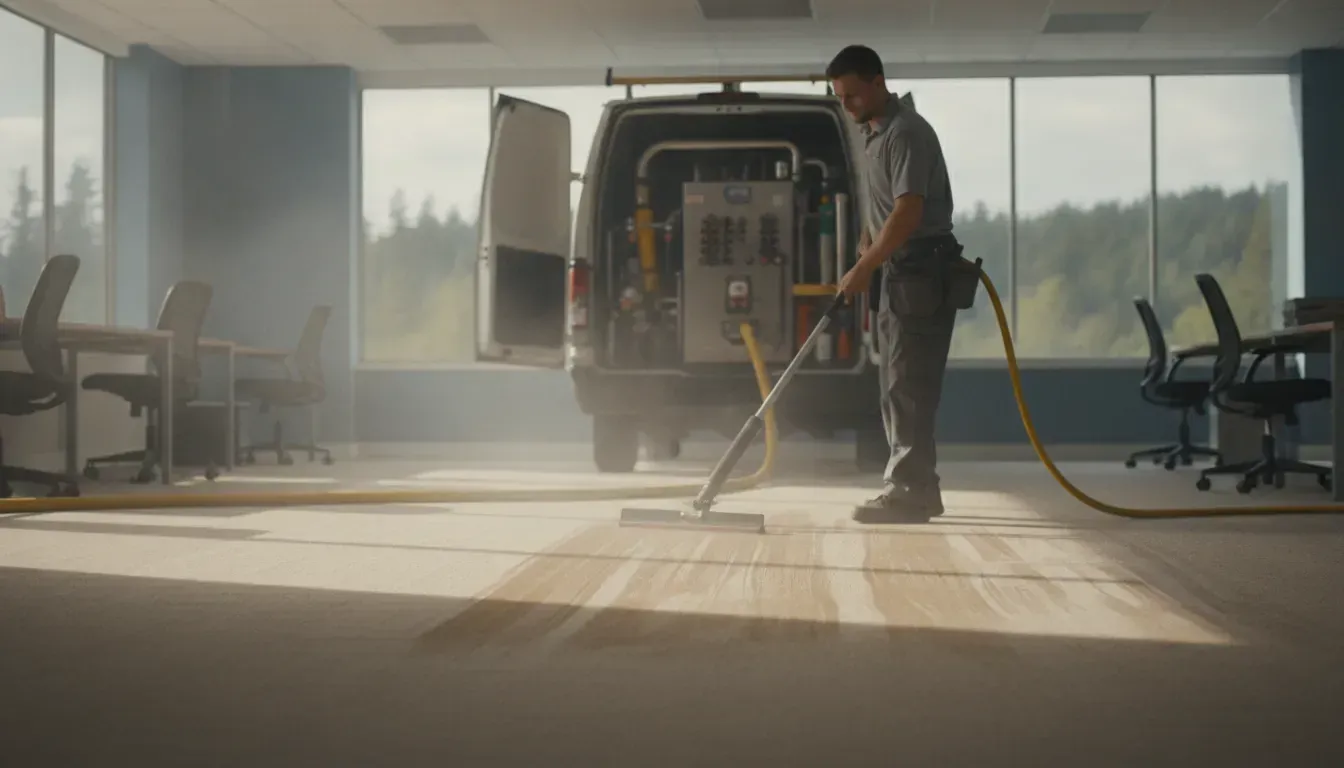
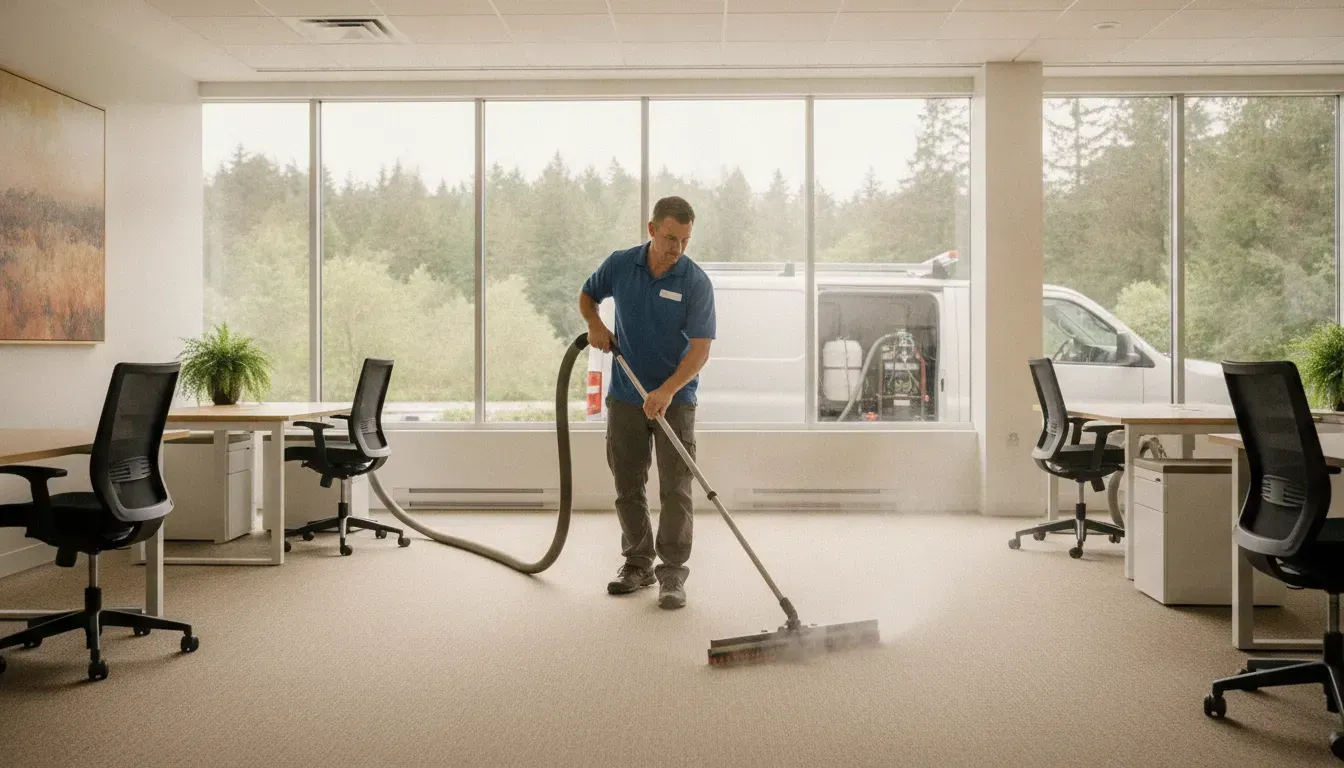
Coordinate the visit with building operations. Ask about access, furniture movement, security, tenant notices, drying time, and areas that cannot be closed. Tubro Carpet Cleaning uses truck-mounted hot water extraction for commercial service. Its quick-dry approach is designed to help businesses plan around downtime, but drying conditions still depend on airflow, humidity, carpet construction, and the building itself.
 Set a review point after each visit. Compare the recorded soil levels, traffic changes, drying observations, and appearance of high-use zones. If the same entry looks heavily soiled before the next planned visit, shorten that zone's interval or review the entry system and daily maintenance.
Use this simple review cycle for each zone:
- Inspect traffic lanes, entry mats, moisture, and visible soil loading.
- Compare the findings with manufacturer requirements and recent service records.
- Schedule targeted or building-wide service around occupancy and access needs.
- Review the zone after service and adjust the next interval when conditions change.
Record the date, areas serviced, observed conditions, access limits, and recommended follow-up. Documentation helps property managers compare changes over time and supports manufacturer maintenance requirements.
When planning commercial carpet cleaning for South King County offices, rentals, and retail, discuss inspection findings and the operating schedule with the provider. A local service plan can account for the property's actual traffic instead of forcing every room into one fixed package.
For information about Tubro's local experience and service approach, visit Tubro Carpet Cleaning's About Us page.
What Happens When Commercial Carpet Cleaning Is Delayed?
Delaying professional service does not make carpet maintenance disappear. Soil continues entering through doors, settling into fibers, and building along busy routes.
Key takeaway: Delayed service can allow soil and traffic patterns to become more established, so managers should use inspection records rather than wait for severe visible wear.
Routine vacuuming removes some dry soil. It cannot replace periodic professional cleaning planned around traffic, building use, climate, and carpet manufacturer guidance. When service is delayed, the first visible change is often a dull or flattened appearance in entries, corridors, reception areas, and work zones.
As particles work deeper into the pile, they can contribute to abrasion, matting, and crushing. Tracked soil can make busy lanes look darker than surrounding carpet. These changes can be more difficult to address when managers wait until the entire building looks overdue.
Delayed work can also create operational problems. A property manager may need a larger service window, more furniture coordination, or a more detailed inspection than the original recurring plan required. In a rental property, postponement can compress cleaning into a tenant transition and create avoidable scheduling pressure.
The answer is not to clean every room on the same rigid cycle. Use zone-based records to identify which areas need priority. A provider can assess the carpet's condition, traffic patterns, and building constraints before recommending the next interval.
Managers should also avoid treating a cleaning date as a substitute for daily maintenance. Keep entry mats in serviceable condition, maintain routine vacuuming, and report new moisture or access issues promptly. These steps support the professional schedule and help the team make better decisions at the next inspection.
Reviewing the plan before visible wear becomes severe gives the business more scheduling options. It can also help protect the appearance of public-facing areas while limiting disruption to lower-use spaces.
Call Tubro Carpet Cleaning at (253) 499-1028 to plan a commercial carpet maintenance schedule.
Frequently Asked Questions
How often should commercial carpets be cleaned?
Many businesses use 6 to 12 months as a general planning range for professional commercial carpet cleaning. High-traffic entrances, hallways, and lobbies may need service every 3 to 6 months. The final interval should account for traffic, building use, carpet condition, climate, and manufacturer guidance.
Does high traffic affect how often carpets need cleaning?
Yes. Foot traffic brings soil and moisture into a building, especially through entrances and busy corridors. Map the busiest zones, inspect them regularly, and consider targeted service when those areas show soil loading or traffic-lane wear before the rest of the property.
What is the best time of year to clean commercial carpet?
The best time depends on building operations, weather, occupancy, and drying conditions. Many businesses schedule work during lower-use periods, closures, or tenant transitions. In wet seasons, pay closer attention to entryway moisture and mat performance when reviewing the schedule.
Should healthcare facilities follow a different cleaning schedule?
Healthcare facilities should use a risk-based process coordinated with infection-prevention and environmental-services leaders. The CDC identifies contamination likelihood, population vulnerability, and surface contact as factors in environmental cleaning decisions. A generic office interval is not a substitute for facility-specific policy.
Ready to Plan Your Commercial Carpet Cleaning?
A practical cleaning schedule helps maintain a professional environment without treating every room the same. Tubro Carpet Cleaning can discuss traffic patterns, business hours, access needs, and carpet condition for properties in South King County and Pierce County.
Call Tubro Carpet Cleaning at (253) 499-1028 to get started.