
Commercial vs Residential Carpet Cleaning Differences
October 9, 2026
Learn the key commercial vs residential carpet cleaning differences in scope, equipment, pricing, scheduling, and carpet wear before you book service
Carpet cleaning is not one-size-fits-all. A family home, retail space, office, and apartment portfolio can use similar carpet, but the cleaning plan changes with square footage, traffic, access, and operating hours.
Schedule your residential or commercial carpet cleaning with Tubro today.
The key commercial vs residential carpet cleaning differences are scope, equipment, pricing, scheduling, and wear patterns. Residential visits usually focus on defined rooms, stairs, halls, closets, rugs, and runners. Commercial projects often cover larger continuous areas, concentrated foot traffic, and tighter scheduling requirements. The right provider should match its equipment, staffing, insurance, and process to the property.
Tubro Carpet Cleaning serves homes and commercial properties across South King County and Pierce County. For a broader look at business-focused options, see our commercial carpet cleaning services. Our truck-mounted hot water extraction system injects heated solution, then removes soil and moisture through powerful vacuum extraction. Commercial-grade equipment supports larger scopes, while clear planning helps limit disruption. The practical differences begin with what must be cleaned and how the space is used.
Understanding Commercial vs Residential Carpet Cleaning Differences
Takeaway: Home carpet cleaning usually follows a room-by-room plan, while commercial work must account for larger areas, heavier use, access limits, and business operations.
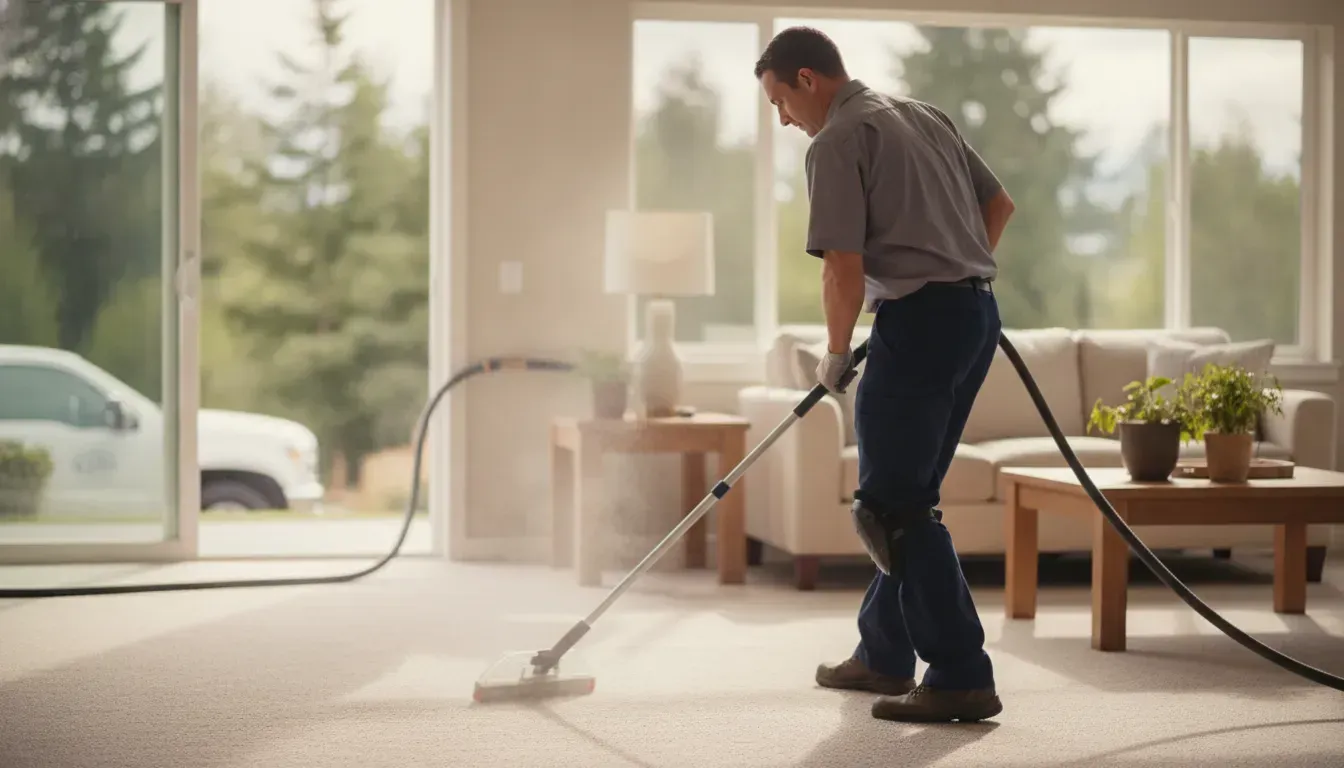
Residential cleaning is often organized around bedrooms, living rooms, hallways, stairs, closets, bonus rooms, area rugs, and runners. The technician can usually work through defined spaces in a home, adjusting the sequence around furniture, household access, children, or pets. The total scope may be smaller, but carpet construction and the condition of each room still affect the cleaning plan.
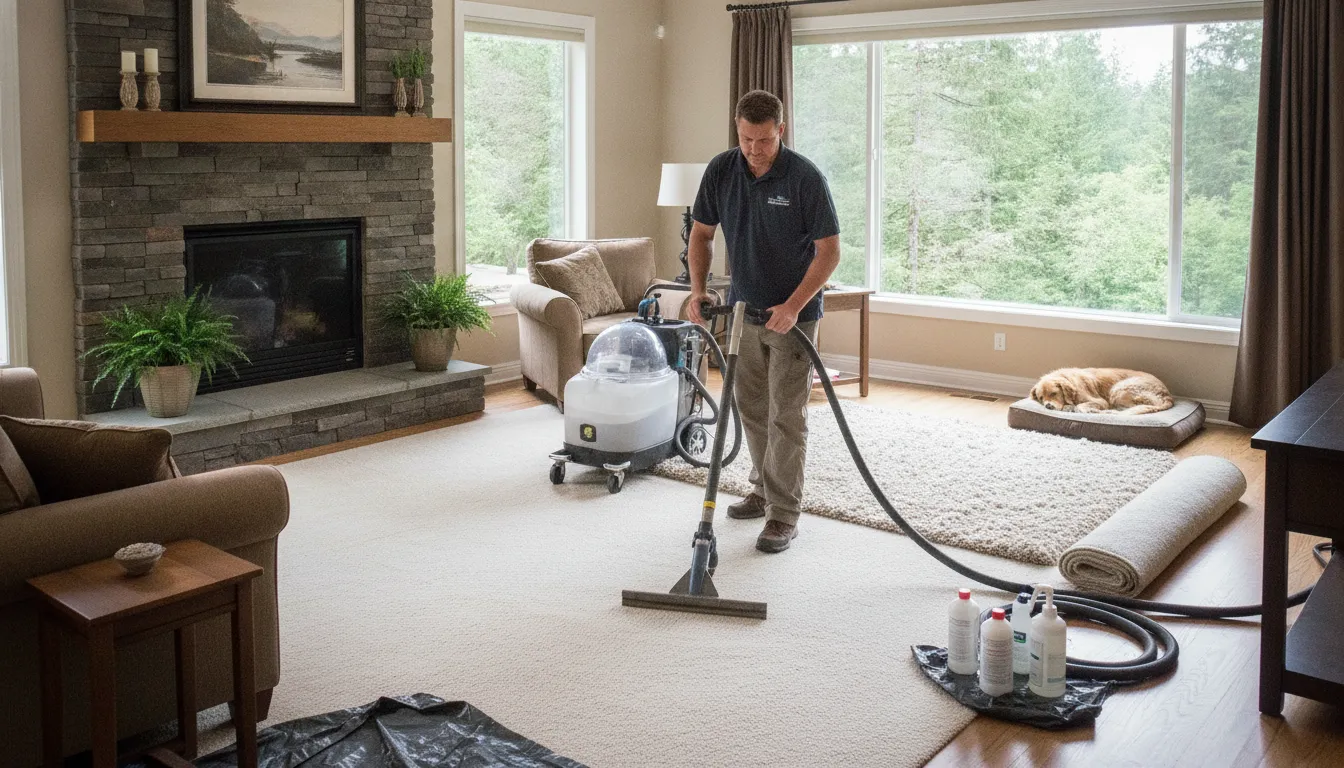 For homeowners in South King County and Pierce County,
residential carpet cleaning services are designed around the home's accessible rooms and the surfaces included in the appointment. A professional assessment helps identify the carpet areas, stairs, rugs, or runners that need attention without assuming every material or condition will respond the same way.
For homeowners in South King County and Pierce County,
residential carpet cleaning services are designed around the home's accessible rooms and the surfaces included in the appointment. A professional assessment helps identify the carpet areas, stairs, rugs, or runners that need attention without assuming every material or condition will respond the same way.
Scale and layout change the work plan
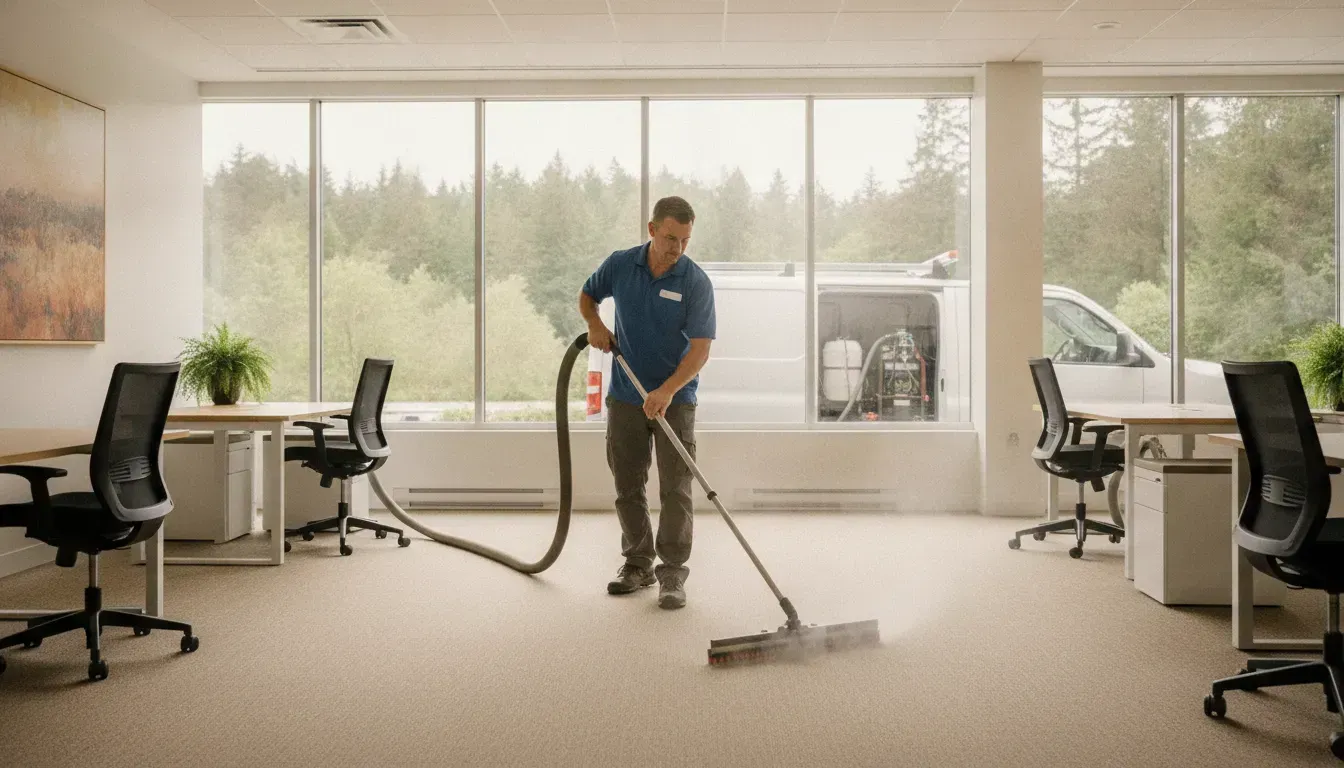
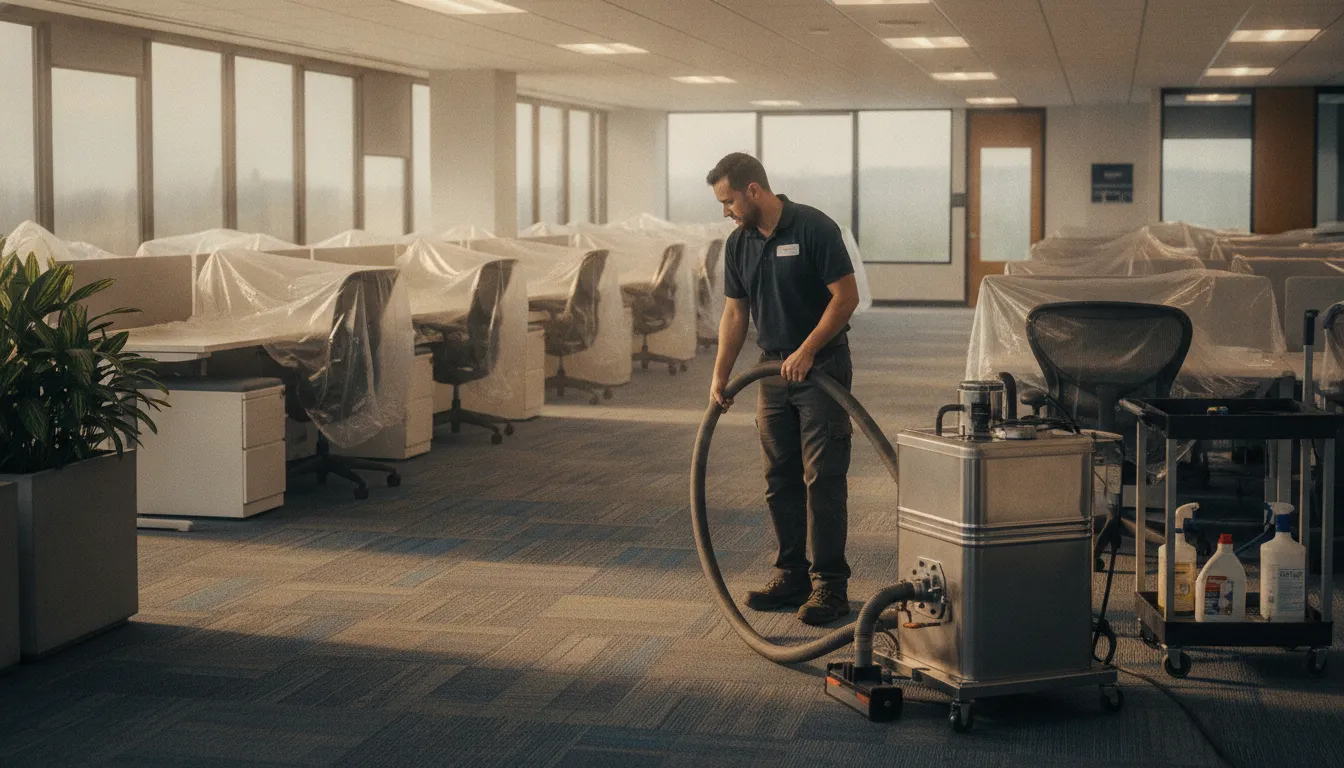
Commercial cleaning may cover offices, retail spaces, apartment properties, property management portfolios, or student housing. Instead of several separate rooms, a project may involve large continuous areas, shared corridors, workstations, entrances, or multiple units. Technicians must consider square footage, furniture density, elevators, loading access, locked rooms, and the order in which zones can be cleaned.
Traffic patterns also differ. Commercial carpet often receives concentrated foot traffic at entrances, corridors, reception areas, sales floors, and shared spaces. Residential wear is more likely to be distributed across household rooms, stairs, entryways, and favorite paths through the home. Those patterns influence the equipment capacity and labor needed, but they do not create a guaranteed result for every carpet.
Why equipment capacity matters
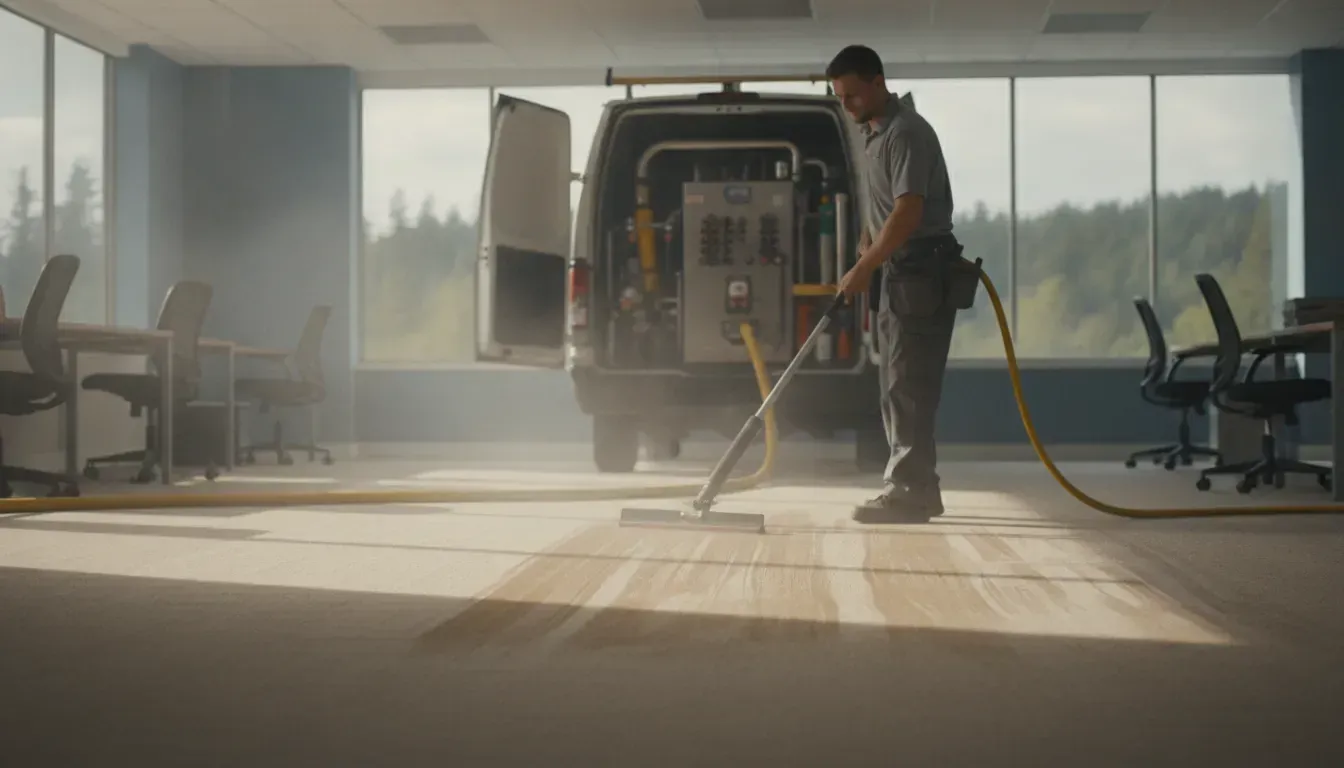
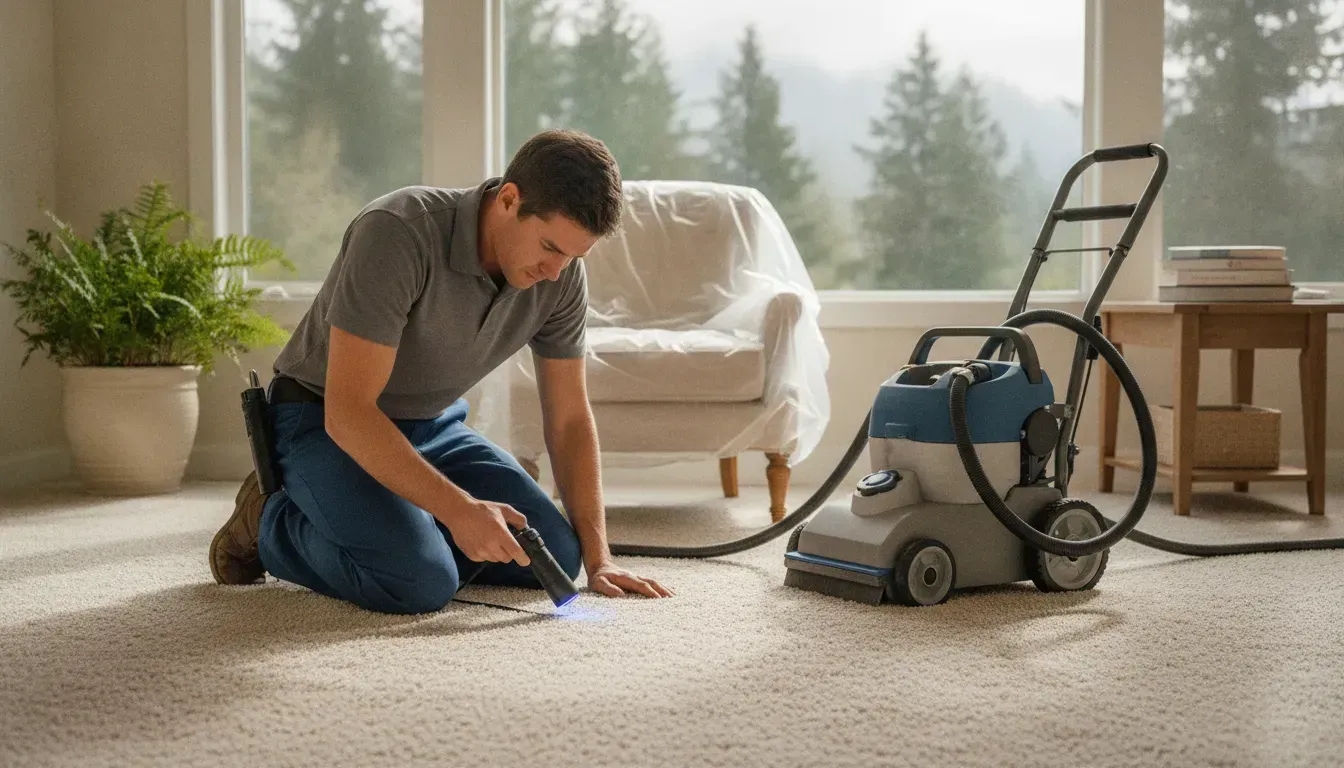
Tubro uses truck-mounted hot water extraction. The system injects heated water and cleaning solution into the carpet, then removes soil and moisture through powerful vacuum extraction. This approach supports both residential appointments and larger commercial scopes when the property can accommodate the equipment and access plan.
Commercial-grade units provide consistent heat and pressure for high-volume work. That capacity matters when a crew must cover extensive carpet without treating a business like a collection of unrelated rooms. Residential equipment demands may be lower in scale, but the same professional process must still account for carpet construction, room layout, moisture management, and safe access.
In short, the equipment choice should follow the property's size, carpet, traffic, and operating constraints. Scope and capacity are the practical foundation of commercial versus residential cleaning.
Why Commercial Carpet Cleaning Is Priced by Square Foot
Residential carpet cleaning is often quoted by room because the work is divided into familiar spaces. A homeowner may need one bedroom, a living room, or several rooms cleaned during one appointment. Square footage still matters, but room count gives the cleaner a practical way to describe a smaller, more contained scope.
Commercial work is usually planned differently. An office, retail space, apartment portfolio, or student-housing property may have large continuous carpet areas, multiple rooms, shared corridors, and varying levels of foot traffic. Square footage gives the cleaning company a consistent starting point for estimating labor, solution use, equipment time, and the overall size of the project.
The final commercial scope can also depend on access, furniture, carpet condition, scheduling requirements, and whether the work covers one location or several. That is why a square-foot rate should be treated as a planning structure, not a guaranteed final price for every property.
Tubro Carpet Cleaning's stated pricing structureTypePricing structurePlanning unitResidential.$189 one room. $259 five rooms. $45 each additional room.Room count.Commercial.$0.35-$0.45 per square foot. $250 minimum.Square footage.
These are Tubro Carpet Cleaning's stated examples and structure, not universal pricing for all carpet cleaners. For current details, review commercial carpet cleaning pricing and discuss the property's actual conditions before scheduling.
Takeaway: Homes are commonly measured by rooms, while commercial projects are commonly measured by square footage because larger properties require scope-based planning. Tubro's rate structure reflects that difference without making the figures universal.
How Scheduling Changes Between Homes and Businesses
Takeaway: Residential appointments are planned around household access, while commercial cleaning requires a coordinated schedule that protects occupants, employees, customers, and business operations.
At a home, scheduling usually means choosing a convenient arrival window and making sure the rooms, stairs, hallways, or rugs are accessible. The homeowner can often move through the rest of the house while the work is underway. A technician may also adjust the order of rooms based on household routines, pets, children, or other access considerations.
Commercial carpet cleaning involves more coordination before the appointment begins. An office manager, retail manager, property manager, or building contact may need to confirm which areas are included, identify locked rooms, and explain building access procedures. Elevators, loading areas, security desks, tenant notifications, and parking restrictions can affect how the crew enters and moves through the property.
Minimizing disruption during business hours
Businesses cannot always close while carpet is being cleaned. The schedule may need to separate public areas from employee spaces, work around customer traffic, or divide a larger property into manageable zones. In some settings, after-hours cleaning is the better fit. That approach can reduce interruptions, but it requires clear coordination for keys, alarms, lighting, access codes, and the person responsible for locking the building afterward.
Apartment turnover adds another scheduling consideration. Property managers often have a narrow window between move-out and the next resident's arrival. Tubro reports completing 20 or more apartment units in 2-3 hours for turnover work. Actual timing depends on unit size, carpet condition, access, crew requirements, and the scope approved for the property.
Planning around drying expectations
Drying time matters in both settings, but the consequences differ. A homeowner may keep family members and pets away from damp carpet until it is ready for use. A business may need to keep a corridor, office, sales floor, or rental unit out of service until the carpet has dried.
Tubro states a 6-12 hour quick-dry range, but conditions can change that estimate. Carpet construction, soil level, humidity, airflow, temperature, and the amount of water used all affect drying. High-powered extraction fans, optimized water use, and air circulation support the process, but they do not create a universal guarantee.
Sharing occupancy details and access constraints before the visit helps Tubro build a practical plan. That is one of the clearest commercial vs residential carpet cleaning differences: the cleaning itself matters, but the schedule must also fit the people and operations around it.
How Wear Patterns Differ in Commercial and Residential Carpet
Takeaway: Commercial carpet often shows broad wear from repeated foot traffic. Residential carpet usually develops localized patterns shaped by rooms, stairs, entryways, pets, and daily routines.
Carpet does not wear evenly simply because it is installed in a large building or a home. The pattern of movement matters. In an office, retail space, or other commercial setting, many people may cross the same entrance, corridor, reception area, or walkway every day. Soil and abrasion can accumulate along long, continuous paths. The carpet may look dull or compressed across a wide area rather than in one clearly defined room.
Commercial traffic can also change throughout the day. Entrances may receive outdoor soil, while corridors connect several high-use areas. A property manager may need an assessment that considers the full traffic flow, furniture placement, access points, and the condition of adjoining carpet. Larger spaces also require equipment capacity that can maintain consistent heat, pressure, and extraction across the work.
 Residential wear is often more room-specific. Hallways, stairs, living rooms, entryways, and paths between frequently used rooms may show the most change. Pets can create additional traffic near doors, feeding areas, and favorite resting places. Families may also use one room heavily while another receives little daily activity. As a result, two rooms with the same carpet may require different levels of attention during an inspection.
Why inspection matters before cleaning
Visible wear is not always a surface-soil issue. Traffic can flatten carpet fibers, alter their direction, and expose differences in lighting or pile shading. Fiber type, age, installation quality, maintenance history, and the carpet's overall condition all affect what professional cleaning can realistically accomplish.
An IICRC-informed technician should evaluate these factors before choosing the cleaning approach. That assessment helps separate removable soil from physical wear, permanent discoloration, fiber damage, or areas that need a more cautious recommendation. It also helps set expectations for building managers and homeowners before work begins.
These are important commercial vs residential carpet cleaning differences because the cleaning plan should follow how the carpet is used, not just the property's label. Professional assessment supports a more accurate scope, schedule, and expectation for the finished appearance.
Can a Residential Carpet Cleaner Handle a Commercial Job?
Sometimes, but the label alone does not answer the question. A cleaner who mainly serves homes may be a good fit for a small office or rental turnover. Larger or more complex work requires the equipment, staffing, planning, and commercial experience to match the site.
Takeaway: Choose a cleaner based on the job's size, access requirements, equipment needs, insurance, and experience with similar commercial environments.
Start with the size and layout of the job
Ask how the company handles the total square footage, rather than only asking whether it accepts commercial customers. A few offices or a small retail area may be manageable for a residential-focused team. A multi-floor office, property-management portfolio, or student-housing turnover requires a clear plan for moving through larger, continuous areas.
Access matters, too. The crew may need loading access, long hose runs, elevator coordination, protected pathways, or a plan for furniture and occupied spaces. Offices and retail locations often cannot operate normally while every carpeted area is being serviced. Rental owners and property managers may also need several units handled in a defined turnover window.
Check the equipment and technician capacity
Commercial work should not depend on undersized equipment or one technician trying to cover an unrealistic area. Ask whether the cleaner uses truck-mounted or other commercial-grade hot water extraction equipment. This method injects heated water and cleaning solution, then removes soil and moisture through vacuum extraction. Commercial-grade units are designed to maintain consistent heat and pressure across high-volume work.
Tubro uses truck-mounted hot water extraction equipment and serves offices, retail spaces, rental properties, property-management portfolios, and student housing. The company also reports completing 20 or more apartment units in two to three hours for turnover work. Actual production depends on unit condition, access, contents, and the agreed scope.
Confirm credentials, coverage, and relevant experience
Commercial customers should confirm that the provider is licensed, bonded, and insured before work begins. They should also ask about experience in the type of property being serviced. Office corridors, retail traffic lanes, rental units, and student housing each create different access and scheduling demands.
Tubro is IICRC certified, licensed, bonded, and insured. Its commercial carpet cleaning services are planned for business and property needs, with scheduling intended to minimize disruption. Ask for a written scope, access plan, and realistic drying expectations before approving the work.
Call Tubro Carpet Cleaning to plan a commercial or residential cleaning visit.
Frequently Asked Questions
How is commercial carpet different from residential carpet?
Commercial carpet usually covers larger, more continuous areas with heavier foot traffic. Residential carpet is often divided among rooms, stairs, hallways, and closets, with wear shaped by household members, pets, and entryways. The right cleaning plan depends on the carpet type, traffic level, access, and total square footage.
Is commercial carpet cleaning more expensive than residential cleaning?
Not necessarily, because the pricing structure is different. Tubro lists residential examples by room, including $189 for one room, $259 for five rooms, and $45 for each additional room. Commercial work is listed at $0.35 to $0.45 per square foot, with a $250 minimum. The final scope should be assessed before pricing.
What equipment is used for commercial carpet cleaning?
Commercial cleaning commonly requires equipment suited to larger areas and sustained use. Tubro uses truck-mounted hot water extraction, which injects heated water and cleaning solution, then removes soil and moisture through vacuum extraction. Commercial-grade units help maintain consistent heat and pressure across high-volume jobs.
Can a residential carpet cleaner handle a commercial job?
Sometimes, but the label alone does not answer the question. The cleaner should have suitable equipment, enough technicians and capacity, commercial-environment experience, appropriate insurance, and a scheduling plan that fits the business. A small office may be manageable, while a large portfolio or retail site requires stronger high-volume planning.
How long does commercial carpet take to dry?
Drying depends on carpet construction, ventilation, humidity, temperature, and the amount of moisture used. Tubro states a typical quick-dry range of 6 to 12 hours, but no responsible cleaner should guarantee the same result for every commercial space.
Ready to Plan the Right Carpet Cleaning?
Residential and commercial carpets face different traffic, access, and scheduling demands. A conversation about your space can help identify a practical cleaning approach that fits the property and minimizes disruption. Call Tubro Carpet Cleaning at (253) 499-1028 to discuss your residential or commercial carpet cleaning needs. We can review the setting, scope, and timing so you know what to expect before scheduling.