Can You Pressure Wash Trex Decking? What to Consider

October 20, 2026

Can you pressure wash Trex decking? Learn how product guidance and deck condition shape the decision, what to ask a provider, and when to pause.

Can you pressure wash Trex decking? Sometimes, but the safe answer depends on the exact board, its condition, and the care instructions for that product. Composite decking is not simply wood that can be cleaned with a standard setting. Before choosing a service, identify the material and ask how the provider will assess the surface.

Ask about pressure washing service

Why does composite decking need a different approach?

Composite decking is made from manufactured materials rather than a single piece of natural lumber. Products can differ in their surface layer, texture, age, and maintenance instructions. Boards that look similar from a distance may have different requirements. The name “Trex-style” is often used casually, but it does not identify the exact product or establish which cleaning methods its maker allows.

Pressure washing brings a concentrated stream of water to a surface. If the pressure, distance, or approach is unsuitable, it may leave visible marks, disturb a surface layer, or affect the appearance of the board. Those risks can be greater when decking is weathered, scratched, loose, or already uneven. A service provider should therefore assess the material and condition rather than assume that one approach works for every deck.

This is not a reason to conclude that every composite deck must never be pressure washed. It is a reason to avoid guessing. The product’s own care guide and warranty terms are the starting point, and the condition of the installed deck matters too. A California Coastal Commission presentation about treated wood in overwater structures discusses composite materials including Trex and advises against pressure washing in that setting. That context-specific guidance is not a universal care rule for every residential deck, but it reinforces why you should consult the instructions for your own board before choosing a method.
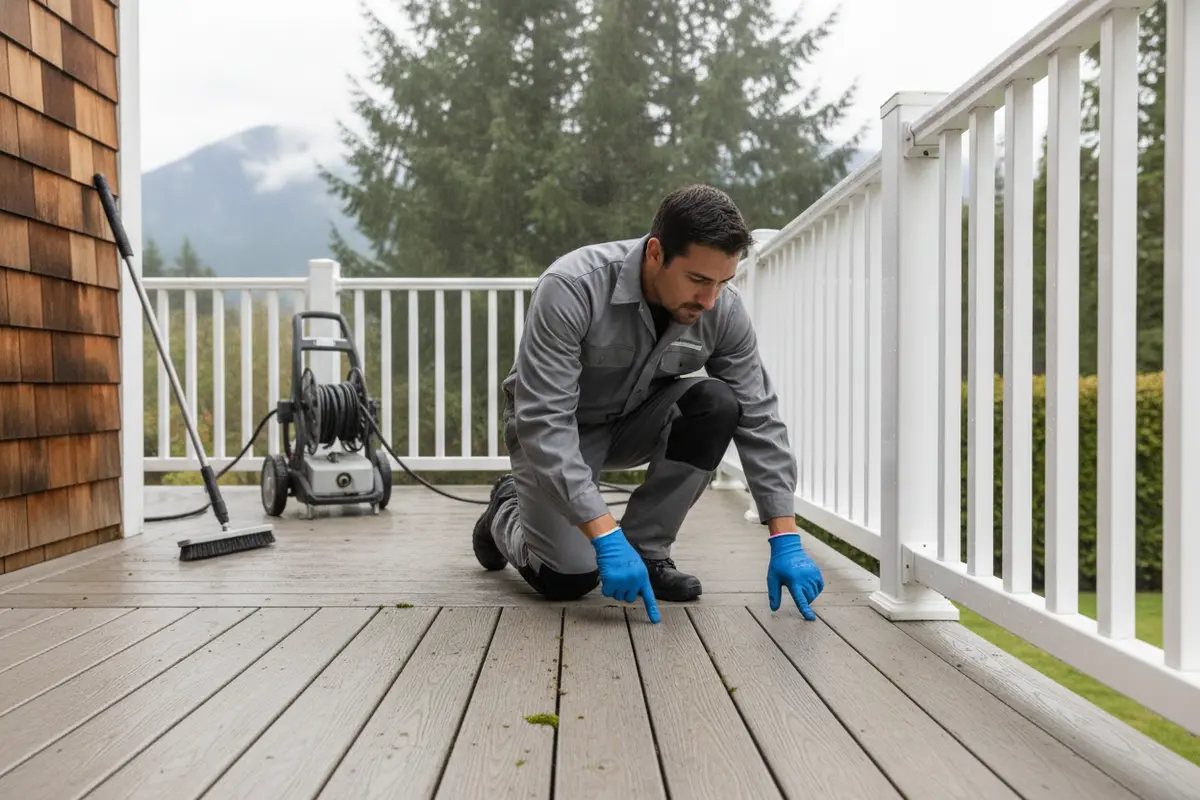
A technician checks composite deck boards before cleaningWhat should you check before arranging a cleaning?

Start with the information you already have. A builder’s invoice, product paperwork, or records from a prior renovation may identify the decking brand and line. If the paperwork is missing, photographs of the boards and their markings may help a knowledgeable provider or installer narrow down what they are. Do not assume that color or grain pattern alone confirms a product.

  • Find the product and care instructions. Look for the manufacturer’s guidance for the specific board line, not general advice for “composite.” Check whether the guidance addresses pressure washing and whether it specifies limits or exceptions.
  • Review the warranty terms. Cleaning methods may be addressed in warranty documents. If a proposed service appears inconsistent with the care instructions, ask the manufacturer or installer for clarification before proceeding.
  • Look at the deck’s current condition. Note loose or lifted boards, damaged edges, deep scratches, fading, soft areas, and previous repairs. Tell the provider about these before the visit.
  • Consider what the surface needs. General buildup, a change in appearance, and a specific mark are different concerns. Describe the issue without assuming pressure washing will resolve it.
  • Ask what the service includes. Confirm which surfaces are included, how the crew will protect nearby areas, and what method they propose for your particular deck.

If you cannot identify the boards or locate reliable care instructions, pause before authorizing a high-pressure approach. A provider should be comfortable explaining what they know, what remains uncertain, and whether the job should be referred back to the manufacturer or installer. It is reasonable to ask for the basis of a recommendation before approving work, especially when the product line cannot be confirmed.

How do deck condition and installation affect the decision?

Even when a manufacturer permits a particular cleaning method, a deck may need a closer look. Age, sun exposure, prior maintenance, and repairs can change the condition of its surface. Boards that are cracked, loose, or worn may need attention beyond ordinary cleaning. A technician should not treat a visibly compromised deck as though it were a new, uniform surface.

Installation details also matter. Gaps between boards, railings, stairs, trim, and nearby siding create different edges and transitions. The cleaning plan should account for the full layout, including where water could travel and which neighboring surfaces may be affected. A discussion before the work helps establish what will and will not be cleaned.

Be specific about any previous treatments or past cleaning, if known. If the deck has been repaired or boards have been replaced, mention that too. These details help the provider decide whether the surface can be assessed confidently or whether more information is needed first. A section that has been replaced may not match the age or condition of the surrounding boards, so it helps to point out the location rather than describing the deck as a single uniform surface.
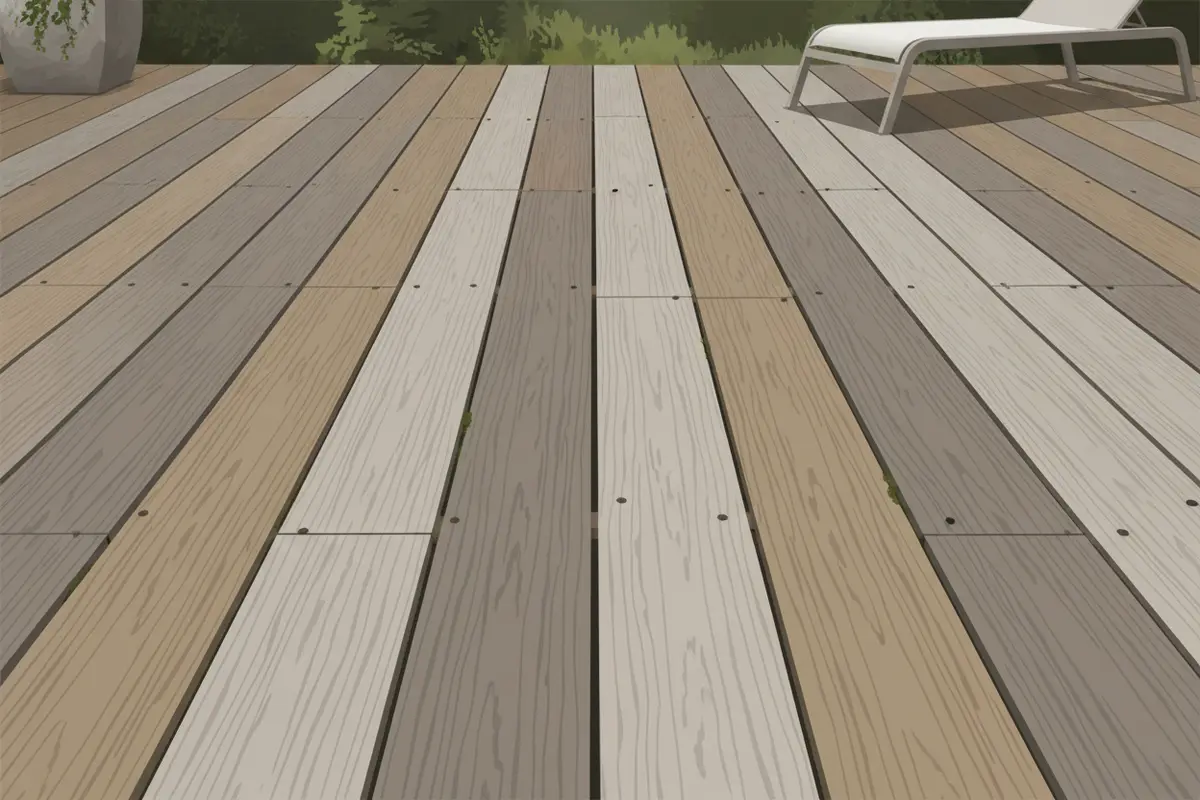
Composite decking surface with visible texture and weatheringWhat questions should you ask a pressure washing provider?

A useful conversation should produce a clear plan, not just a yes or no. Ask how the provider identifies the decking, what information they need from you, and whether their proposed method follows the product’s care directions. If they cannot confirm the product, ask how they will handle that uncertainty.

  • Have you cleaned this type of composite decking before, and what information do you need to confirm the material?
  • Will you check the manufacturer’s care instructions before recommending a method?
  • How will you account for the deck’s age, wear, repairs, and current condition?
  • Which parts of the deck and adjacent surfaces are included in the service?
  • What conditions would cause you to recommend a different service or postpone work?
  • Can you explain the scope and pricing before work begins?

Look for answers that are specific to your property. A provider should be able to explain the basis for the recommendation and identify limits. Be cautious of blanket claims that every composite deck can be cleaned the same way, or that a particular result is certain before the material and surface have been assessed. You can also ask how the provider will document the agreed scope, what areas are excluded, and whom to contact if the proposed work changes after inspection.

For a broader overview of exterior cleaning considerations, see Tubro’s pressure washing guide. You can also review the company’s pressure washing service information and ask whether the requested deck surface fits the service scope.

How should you prepare for a deck assessment?

You do not need to diagnose the decking yourself. A few details can make the first conversation more useful. Note when the deck was installed, if you know, and whether all the boards appear to be from the same project. Keep product labels, invoices, warranty paperwork, and any care instructions together so you can share the relevant information. If the deck was part of a home purchase, ask whether the prior owner left product records.

Describe the concern in neutral terms. For example, explain whether the deck has general outdoor buildup, uneven color, or an area that looks different from nearby boards. Mention where the change appears and whether it has been present for some time. Avoid assuming that a mark is surface dirt or that a cleaning service will remove it. A provider can use your description to decide what further questions to ask.

Walk through the full area you want considered. Include stairs, landings, railings, and any transitions to siding, stone, or other materials. Note features such as planters or outdoor furniture that may affect access. The point is not to move or treat anything in a particular way; it is to help the provider understand the job and identify any limitations before giving you a scope.

Finally, ask what the provider needs to confirm before work is scheduled. If the answer depends on product guidance, you may need to locate the care document first. If it depends on the surface condition, the provider may need to see the deck. Taking this step can prevent mismatched expectations and make it easier to compare service proposals fairly. When speaking with more than one provider, share the same product details and describe the same area so you can compare their recommendations on similar terms.

How do the options compare?

The best next step depends on how much you know about the boards and what the deck needs. Use this comparison to frame the conversation. It is not a substitute for manufacturer instructions or an assessment of the actual surface.

Situation: Product and care guide are known, deck appears sound

Reasonable next step: Ask a provider to assess the proposed service against the manufacturer’s guidance

What to confirm: Method, scope, nearby surfaces, and any care-guide limits

Situation: Product is uncertain or documents are unavailable

Reasonable next step: Identify the boards or seek clarification before approving pressure washing

What to confirm: Whether the provider can verify the material and support the recommendation

Situation: Boards are loose, worn, damaged, or previously repaired

Reasonable next step: Discuss the condition first; consider contacting the installer or manufacturer

What to confirm: Whether cleaning is appropriate before repairs or further inspection

Situation: Concern is a specific mark or change in appearance

Reasonable next step: Describe the concern and ask for an assessment rather than assuming a cleaning method

What to confirm: Whether cleaning is within scope and what outcome is realistic

Situation: Provider cannot explain the plan or its basis

Reasonable next step: Wait and seek a clearer assessment

What to confirm: Product guidance, service limits, and written scope

Can you clean composite decking without pressure washing?

Possibly. The right approach depends on the decking manufacturer’s directions and the type of soil or buildup involved. Some care instructions may describe a lower-impact routine, while other concerns may call for a professional assessment. This article does not provide a universal alternative method because products and conditions differ.

Avoid treating an online tip as permission to use a product or technique on an unidentified deck. If the guidance is unclear, ask the manufacturer or installer. If you speak with a cleaning company, explain what you have already tried and whether the appearance changed. Tubro also provides hard surface cleaning services; ask directly whether your outdoor composite deck is within the service scope before booking.

What should you expect from a professional assessment?

A thoughtful assessment begins by clarifying the material, the deck’s condition, and the reason for service. The provider may ask for product details or photographs, then discuss the requested area and nearby surfaces. If an on-site review is needed, the provider should be able to explain what they observe and how it affects the recommendation.

Before approving work, make sure the service scope is clear. Confirm which boards, steps, railings, or adjacent areas are included, and ask what the provider will do if the condition differs from what was described. Agree on the method only after the relevant product guidance and surface concerns have been considered. A clear scope also gives you a chance to resolve questions about access and expectations before a service visit.

For local service information, you can visit Tubro’s Maple Valley service-area page or contact the team with details about your decking. You can also see the company’s gallery for examples of its work, while keeping in mind that a photo cannot establish the product or condition of your own deck.

Frequently Asked Questions

Can pressure washing void a Trex decking warranty?

It depends on the product and the warranty terms. Check the documentation for your exact decking line and confirm any unclear point with the manufacturer before authorizing a cleaning method.

Is all composite decking made by the same rules?

No. Products and care instructions vary. A general label such as “composite” or “Trex-style” is not enough to establish the appropriate method for a particular installed deck.

What if I cannot tell which decking I have?

Look for product records, installation paperwork, or information from the builder or prior owner. If the product remains unidentified, ask the provider whether they can assess it reliably or recommend getting clarification before work.

Does pressure washing guarantee a like-new appearance?

No cleaning provider should promise a specific appearance without considering the material and its condition. Wear, fading, damage, and other changes may not be resolved by cleaning.

Discuss your deck cleaning needs

When you know the product and understand its care guidance, you can have a more useful conversation about whether pressure washing is appropriate for your composite deck.
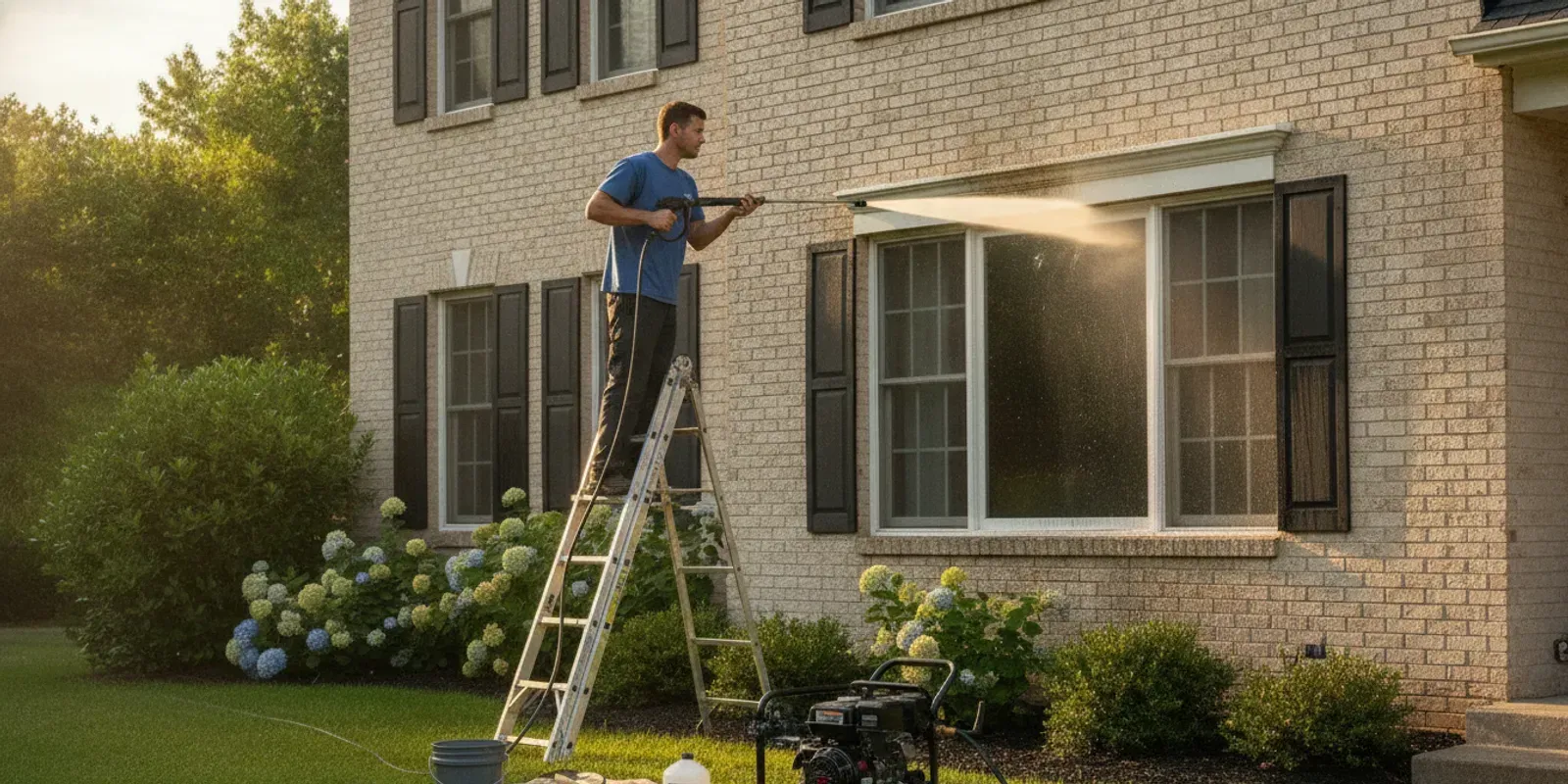
Tubro technician assessing exterior windows at a South King County home
By Ryota Nishino • October 19, 2026
Can windows be pressure washed safely? Learn what affects the risk, which surfaces need special care, and when to ask a professional for assessment.
Professional upholstery cleaning technician using an extraction tool on a fabric sofa
By Ryota Nishino • October 17, 2026
Learn how Washington homeowners can choose upholstery cleaning methods, understand fabric needs, and plan service with Tubro Carpet Cleaning.
Professional upholstery cleaning technician using an extraction tool on a fabric sofa
By Ryota Nishino • October 17, 2026
Learn how Washington homeowners can choose upholstery cleaning methods, understand fabric needs, and plan service with Tubro Carpet Cleaning.
Professional carpet cleaning team inspecting clean commercial carpet
By Ryota Nishino • October 17, 2026
Learn how to choose commercial carpet cleaning company services by comparing credentials, equipment, contracts, scheduling, drying, and pricing.
Professional carpet cleaning team inspecting clean commercial carpet
By Ryota Nishino • October 17, 2026
Learn how to choose commercial carpet cleaning company services by comparing credentials, equipment, contracts, scheduling, drying, and pricing.
Pet-safe carpet cleaning for Covington families in a bright home
By Ryota Nishino • October 16, 2026
Learn how pet-safe carpet cleaning helps Covington families manage pet dander, indoor dirt, odor concerns, and drying time with Tubro's process.
Professional carpet cleaning technician inspecting carpet in a bright home
By Ryota Nishino • October 16, 2026
Learn what IICRC certification means for carpet cleaning, which credentials fit homes and businesses, and what to ask a local provider.
Professional carpet cleaning in a bright Pacific Northwest home
By Ryota Nishino • October 13, 2026
. How long carpets usually take to dry after professional cleaning depends on the carpet, room, and cleaning conditions. Tubro Carpet Cleaning states that its quick-dry process can support a 6 to 12 hour drying time. Actual results vary with carpet construction, moisture, airflow, humidity, and the work performed. Call Tubro at (253) 499-1028 to plan professional carpet cleaning and ask about drying time. This guide explains what changes drying time and how to plan your rooms afterward. It applies to homeowners, landlords, property managers, and businesses across South King County and Pierce County. How Long Carpets Usually Take to Dry After Professional Cleaning After professional hot water extraction, many carpets dry within several hours. Tubro identifies a 6 to 12 hour drying range for its quick-dry process. That range gives homeowners a useful starting point when planning cleaning around work, children, pets, or guests. The common professional cleaning range Drying begins when the technician finishes extracting moisture from the carpet. Carpet may feel cool or slightly damp before it becomes fully dry. Touch alone cannot always show whether moisture remains deeper in the pile or backing. A small room with good airflow may dry sooner than a large room with dense carpet. A heavily soiled area may also need more cleaning work. That can change the amount of moisture left behind. Why the estimate is not a promise A drying estimate describes expected conditions rather than a fixed deadline. Indoor humidity, ventilation, carpet fiber, padding, soil level, and equipment setup all affect the outcome. Ask the technician what to expect for your rooms. This matters when you need to replace furniture, welcome guests, reopen an office, or return a rental to service. Summary: Tubro's stated 6 to 12 hour range is a practical planning estimate. Your carpet may dry sooner or take longer based on the room and cleaning conditions. When you are ready to discuss a service visit, use the Tubro contact page to share your location and timing needs. What Happens During Professional Carpet Cleaning? Professional carpet cleaning uses a planned process that balances soil removal, fiber care, and moisture recovery. Tubro describes hot water extraction, also called steam cleaning, as its primary carpet-cleaning method. Hot water extraction and moisture recovery Hot water extraction applies cleaning solution and water, then removes the mixture with powerful vacuum equipment. The extraction stage is important because it removes suspended soil and much of the moisture used during cleaning. Truck-mounted equipment can support strong extraction at the property. The result still depends on carpet construction, access, technician setup, and the amount of cleaning required. The final inspection and drying plan A responsible visit includes a review of the cleaned areas and the expected next steps. Ask which rooms were cleaned and when they can return to normal use. An IICRC-certified textile cleaning professional can also explain care considerations for the carpet type. Manufacturer guidance should remain part of the planning process, especially for newer carpet or warranty-covered flooring. Review Tubro residential carpet cleaning to learn more about the company's local service approach. Summary: Extraction quality affects drying because the process removes moisture from the carpet. Equipment, carpet condition, and a clear final inspection all help set realistic expectations. Which Factors Affect Carpet Drying Time? Several conditions can make carpet dry faster or slower. Understanding them helps you plan service without relying on a single universal number. Carpet fiber and pile thickness Dense or thick carpet can hold more moisture than a low-profile carpet. Padding and backing can also retain moisture below the visible surface. Fiber type and construction should guide the technician's method and the expected timeline. Humidity and indoor temperature Moist air slows evaporation because it has less capacity to accept additional moisture. Cooler rooms can also dry more slowly. Pacific Northwest homes may experience different conditions during damp winter weather and warmer summer days. Airflow and ventilation Moving air helps moisture leave the carpet surface. Closed rooms with limited ventilation often take longer than rooms with useful air circulation. The best approach depends on outdoor conditions, indoor comfort, and the technician's guidance. Cleaning scope and carpet condition A larger job can take longer to dry than one small room. Heavy soil, dense traffic lanes, and carpet that needs additional attention can change the amount of work and moisture involved. Summary: Carpet type, humidity, temperature, airflow, and cleaning scope all influence drying. Ask for room-specific guidance instead of treating one estimate as universal. How Should You Plan Room Use After Cleaning? Planning room use is part of a successful cleaning appointment. Keep people and pets away from treated areas until the carpet is ready for normal traffic. Identify the rooms that must return to use first. Tell the technician about children, pets, furniture, and access limits. Plan an alternate path until each cleaned area is ready for normal traffic. This simple order helps households, landlords, and businesses avoid unnecessary traffic while the carpet dries. It also creates a clearer conversation about the rooms that need special attention. Before the appointment Tell the cleaner which rooms matter most and when each room must be usable. Move small items from the carpeted areas, unless the technician has approved another arrangement. Share entry, parking, gate, stair, and access details before the visit. Keep children and pets away from active work areas. Have carpet manufacturer information available when you know the fiber or warranty requirements. After the appointment Follow the technician's instructions about walking, furniture, children, and pets. If you must cross a damp area, ask what is appropriate for that carpet and situation. Plan a clear path through the home and keep heavy traffic away from freshly cleaned carpet. This reduces tracking and gives the carpet time to finish drying evenly. When a business needs a quick return to use Property managers and business owners should identify priority rooms before service begins. Offices, retail areas, rental units, and shared spaces may need different schedules. Share operating hours and access limits with the provider. Tubro's commercial carpet cleaning service information can help business owners prepare a more focused request. For a property with several rooms, the priority list can also guide the cleaning sequence. Share deadlines before the appointment, then confirm which spaces should remain closed. This planning does not change physical drying time, but it can make the return to normal use more orderly. Summary: A good drying plan starts before the technician arrives. Prioritize rooms, limit traffic, and follow the technician's guidance until the carpet is ready. How Can You Support Faster, More Even Drying? Homeowners can support drying by creating suitable airflow and reducing unnecessary traffic. These steps do not replace professional extraction or the technician's instructions. Use practical airflow Ask whether fans, ventilation, or air conditioning are appropriate for the conditions. Air movement can help, but opening windows is not always useful during damp outdoor weather. Keep doors and pathways arranged so air can move without creating a safety problem. Do not place objects directly on damp carpet unless the technician says it is safe. Reduce moisture added after service Avoid washing floors nearby or bringing wet items across freshly cleaned carpet. Keep outdoor moisture and household traffic away while the carpet is drying. Watch the whole room, not one small spot Carpet may feel different near walls, under furniture, or in thicker traffic lanes. Check the rooms as a whole and follow the agreed care plan. If carpet remains unusually damp beyond the expected window, contact the cleaning company for guidance. Do not assume that a longer drying period means the service failed. Room conditions and carpet construction may explain the difference. Summary: Appropriate airflow, limited traffic, and careful room use can support more even drying. Contact the provider when the carpet stays damp longer than expected. How Does Pacific Northwest Weather Affect Drying? Weather can influence indoor humidity and ventilation in South King County and Pierce County. Seasonal conditions do not create one fixed drying schedule, but they can change how quickly moisture leaves carpet. Damp conditions High outdoor humidity can make natural ventilation less helpful. During damp weather, ask about indoor airflow and the best way to support drying without making the room uncomfortable. Warmer, drier conditions Warm conditions may support faster evaporation when indoor humidity is controlled. Even then, thick carpet, padding, and limited airflow can extend the timeline. Local service planning Tell the technician about rooms with limited windows, basement locations, or unusual ventilation. These details help the team provide more useful guidance for the property. For broader indoor carpet-care context, the EPA carpet-care guidance recommends considering manufacturer instructions and household conditions. Summary: Seasonal humidity and room ventilation can change drying time. Local conditions are useful context, but carpet construction and indoor airflow still matter most for the individual room. When Should You Call a Professional Carpet Cleaner? Professional service is useful when carpet needs a deeper clean than routine vacuuming can provide. It can also help when a home, rental, office, or retail space needs a planned maintenance visit. Choose a clear service plan Ask about the cleaning method, rooms included, expected drying range, and post-service care. A clear plan helps you schedule around daily life without relying on unsupported promises. Tubro serves local communities across South King County and Pierce County. You can review Maple Valley carpet cleaning service for local context, or visit the Tubro About Us page to learn about the company. Ask the right drying questions Before booking, ask what drying range is realistic for your carpet and rooms. Mention the carpet type, room size, ventilation, furniture, children, pets, and the time you need the space ready. That conversation gives you a better plan than a generic promise. It also helps the technician identify conditions that may change the expected timeline. Summary: A reliable professional explains the method, scope, drying range, and care plan. Clear questions help you choose a service time that fits your property. Call Tubro at (253) 499-1028 to ask about carpet cleaning and a realistic drying timeframe. Frequently Asked Questions How long do carpets usually take to dry after professional cleaning? Many carpets dry within several hours after professional hot water extraction. Tubro states that its quick-dry process can support a 6 to 12 hour drying time, but results vary by carpet and room conditions. Can carpet dry in one day after professional cleaning? Yes, many professional cleaning jobs can dry within the same day. Humidity, carpet thickness, padding, airflow, and cleaning scope can extend the timeline. What makes carpet take longer to dry? Dense carpet, thick padding, high humidity, cool rooms, limited ventilation, and a larger cleaning scope can all extend drying time. Can I walk on carpet while it is still damp? Follow the technician's instructions. Keep traffic limited while carpet dries, and keep children and pets away from treated areas until the carpet is ready for normal use. What should I ask before booking carpet cleaning? Ask about the cleaning method, expected drying range, rooms included, access requirements, furniture, and post-service room-use guidance. Share any carpet manufacturer instructions you have. Plan Your Carpet Cleaning With Tubro Drying time matters when you are planning around family routines, tenants, guests, or business operations. Tubro Carpet Cleaning can discuss your carpeted areas, local service needs, cleaning method, and realistic drying expectations before the appointment. Call Tubro Carpet Cleaning at (253) 499-1028 to plan professional carpet cleaning in South King County or Pierce County. 
Professional carpet cleaning in a bright Pacific Northwest home
By Ryota Nishino • October 13, 2026
Learn how long carpets usually take to dry after professional cleaning, what affects the timeline, and how to plan room use with Tubro Carpet Cleaning.
Professional carpet cleaning equipment in a bright commercial office
By Ryota Nishino • October 9, 2026
Learn the key commercial vs residential carpet cleaning differences in scope, equipment, pricing, scheduling, and carpet wear before you book service