How to Choose Commercial Carpet Cleaning Company
October 17, 2026
Learn how to choose commercial carpet cleaning company services by comparing credentials, equipment, contracts, scheduling, drying, and pricing.

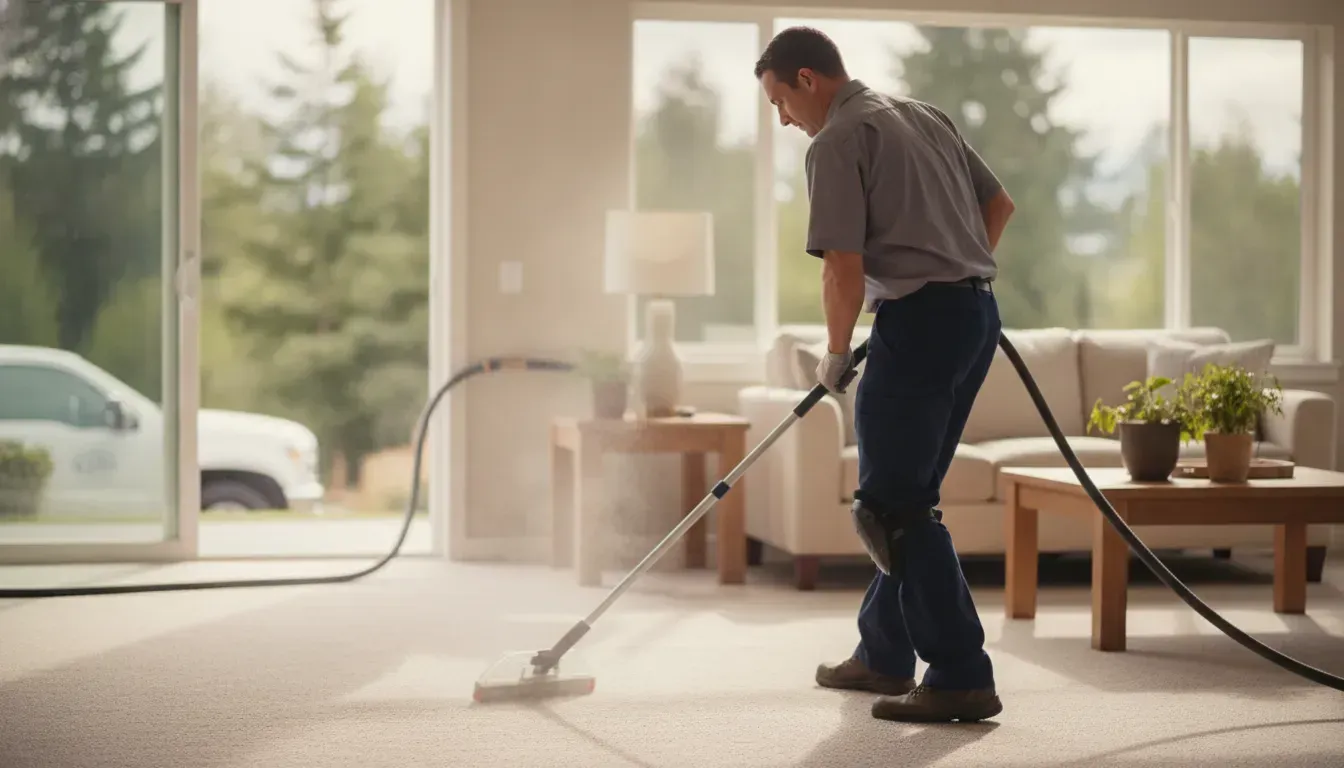
If you are researching how to choose commercial carpet cleaning company services, start with fit rather than the lowest bid. The right provider should fit your building, schedule, carpet needs, and accountability standards. A clear scope, trained technicians, appropriate equipment, proof of insurance, and realistic drying expectations can protect both your property and your operating schedule. For a broader local buying framework, review Tubro's Commercial Carpet Cleaning for South King County Offices, Rentals, and Retail.
Schedule a commercial carpet cleaning consultation with Tubro at (253) 499-1028.
To choose a commercial carpet cleaning company, compare credentials, experience, methods, pricing, scheduling, and service policies before signing.
For offices, retail spaces, apartments, and managed portfolios, these details matter because cleaning quality is only one part of the buying decision. You also need a vendor that communicates clearly and can work around occupied spaces, turnovers, or business hours. Tubro Carpet Cleaning serves commercial properties across South King County and Pierce County. You can review its commercial carpet cleaning services as one local example while comparing providers. Start by checking the credentials behind the proposal, not just the promises in it.
How to Choose a Commercial Carpet Cleaning Company for Your Facility
Credentials help you separate a dependable vendor from a company that simply makes broad claims. They do not replace a written scope, site assessment, or clear communication, but they give you a practical starting point when comparing providers.
Look for training that supports sound decisions
IICRC certification is a useful signal that technicians have pursued recognized training in carpet and textile cleaning principles. Ask which technician or supervisor will oversee your project. Ask what training applies to your carpet type. Also ask how the company adjusts its process for traffic levels, furnishings, access, and occupied spaces. Certification is not a guarantee of a perfect result, but it can indicate a more disciplined approach than unverified experience alone.
Verify licensing and insurance
A commercial cleaner should be able to provide current proof that the business is licensed and insured. Bonding may also be relevant, especially when technicians work in offices, apartment communities, retail spaces, or managed properties. Ask what the policy covers and whether additional documentation is needed before work begins. This protects your organization from relying on an informal verbal assurance if property damage or an on-site incident becomes a concern.
Check experience with comparable facilities
Residential experience does not automatically translate to commercial work. Ask how long the company has operated, whether it regularly serves facilities like yours, and how it handles recurring schedules or multi-unit turnover. Request commercial references or recent examples that match your operating environment. A useful reference can speak to arrival windows, communication, worksite conduct, drying expectations, and follow-through, not only the appearance of the carpet afterward.
Experience also includes the ability to plan around business operations. A provider should explain its equipment, staffing, access needs, product choices, and escalation process in plain language. For larger facilities, ask who manages the account and who resolves problems if the assigned crew needs support.
Tubro Carpet Cleaning is locally owned, has operated since 2010, and is documented as licensed, bonded, insured, and IICRC certified. Its commercial carpet cleaning services cover offices, retail spaces, rental properties, apartments, property management portfolios, and student housing.
Summary: When learning how to choose commercial carpet cleaning company options, verify IICRC training, licensing, insurance, relevant operating experience, and commercial references before comparing price alone.
Questions to Ask Before Signing a Commercial Carpet Cleaning Contract
A strong contract should make the work, cost, timing, and follow-up responsibilities easy to understand. Use these questions to compare providers consistently and avoid selecting a vendor based only on a low headline quote.
- What areas and tasks are included in the scope? Ask the provider to identify each building, floor, room type, carpeted square footage, furniture-moving expectations, edges, stairs, and any agreed preparation. Confirm whether recurring maintenance, apartment turns, odor concerns, or upholstery are included or priced separately.
- How is the price calculated? Ask whether the quote is based on measured square footage, labor, rooms, or the overall project. Confirm minimum charges, travel fees, after-hours rates, furniture fees, and any charges for additional work. Request the final assumptions in writing. A useful quote comparison may include the provider's documented commercial carpet cleaning cost, but do not treat one company's rate as a universal market price.
- What schedule can you reliably support? Discuss service frequency, arrival windows, weekend or evening work, building access, tenant coordination, and rescheduling procedures. The right schedule should reduce disruption without forcing rushed work.
Which cleaning method and equipment will technicians use? Ask why the proposed method fits the carpet type, traffic level, and facility. For example, hot water extraction uses heated solution and powerful recovery equipment to flush and extract soil. The method should be explained rather than presented as universally best.
What should we expect for drying time? Ask for a typical range, the conditions that can extend it, and what ventilation or air circulation the crew will provide. Damp carpet needs careful management. The EPA notes that carpet remaining damp can support microbial growth, so drying expectations belong in the service plan. Review the EPA's carpet guidance when setting facility procedures.
Which products are used, and are alternatives available? Request product names or safety information, especially for occupied offices, childcare settings, medical environments, or sensitive occupants. Ask how technicians handle product selection without making unsupported promises about odors or difficult spots.
Who handles access, security, and site protection? Confirm keys, badges, alarms, parking, water access, loading areas, furniture, wet-floor signage, and protection for walls and baseboards. Put responsibility for opening and securing the facility in writing.
What happens if the service misses the agreed standard? Ask who reviews concerns, how quickly the provider responds, and whether a documented re-cleaning or correction policy applies. You want a clear service-recovery path, not a vague satisfaction promise.
Summary: The best contract defines the work and price. It also explains timing, drying, and service recovery. Clear answers make it easier to choose a provider that fits your facility.
Why IICRC Certification Matters for Commercial Carpet Cleaning Bids
Summary: IICRC certification is useful, but evaluate it with job planning, carpet knowledge, documentation, insurance, and service accountability.
Certification can help separate a trained carpet-care provider from a company that relies mainly on generic cleaning routines. The Institute of Inspection Cleaning and Restoration Certification, commonly known as IICRC, provides industry education and certification pathways for technicians and firms. That background may indicate familiarity with fibers, soil conditions, cleaning principles, and professional terminology.
It is not a guarantee of a successful project. Certification does not replace a site review, a clear scope, suitable equipment, or careful communication. A bid can still be incomplete if it does not explain how the provider will work around occupants. Furniture, access restrictions, business hours, and the carpet systems installed at your property.
Ask what the technician knows about your carpet
During bid comparisons, ask how the company will identify the carpet fiber, construction, backing, traffic patterns, and areas requiring special attention. A knowledgeable provider should be able to explain why the planned method fits the material and site conditions. The answer should be specific to your property, not a generic promise that one process works for every carpet.
Ask whether the technician will inspect the carpet before work begins and how pre-existing wear, discoloration, permanent spots, or odor concerns will be documented. Professional assessment helps set realistic expectations before the crew starts. It also gives your team a shared record if an area needs additional review after cleaning.
Request a plan you can evaluate
A strong commercial bid should describe the planned cleaning method, products, equipment, work sequence, access requirements, scheduling, and expected drying conditions. It should also identify who will supervise the job and how issues will be handled. If subcontractors may be involved, ask who performs the work and who remains accountable for the result.
Request written documentation that covers the service areas, exclusions, price basis, preparation responsibilities, and follow-up policy. This makes bids easier to compare and reduces confusion after approval. Training matters most when it shows up in consistent inspection, careful decision-making, and clear records.
For example, Tubro Carpet Cleaning is documented as IICRC certified, licensed, bonded, and insured. Those credentials are useful starting points, but commercial buyers should still ask for a property-specific plan and confirm that the proposed service matches their facility's needs.
What Equipment and Process Should a Commercial Provider Explain?
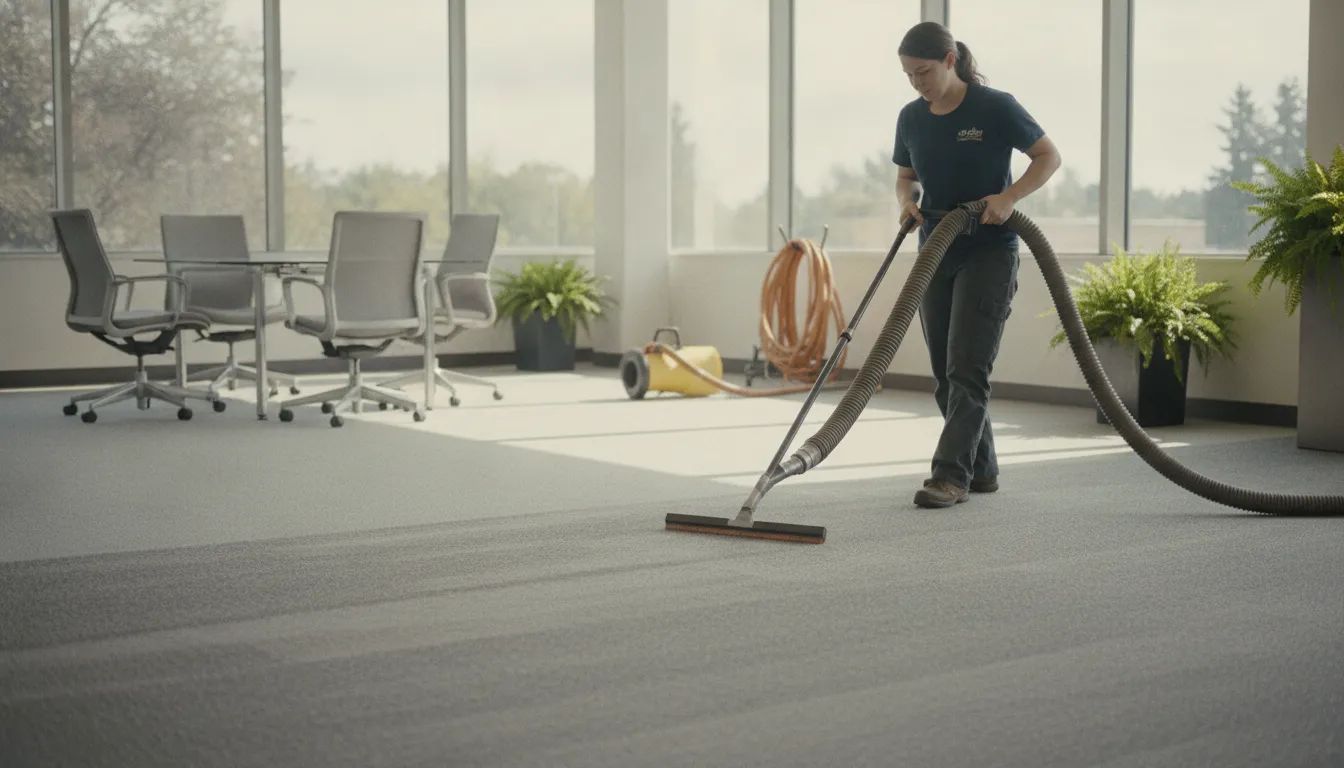 Summary: A credible provider should connect its equipment and cleaning sequence to your facility's needs. The drying plan and staffing should also fit your traffic, access, and operating schedule.
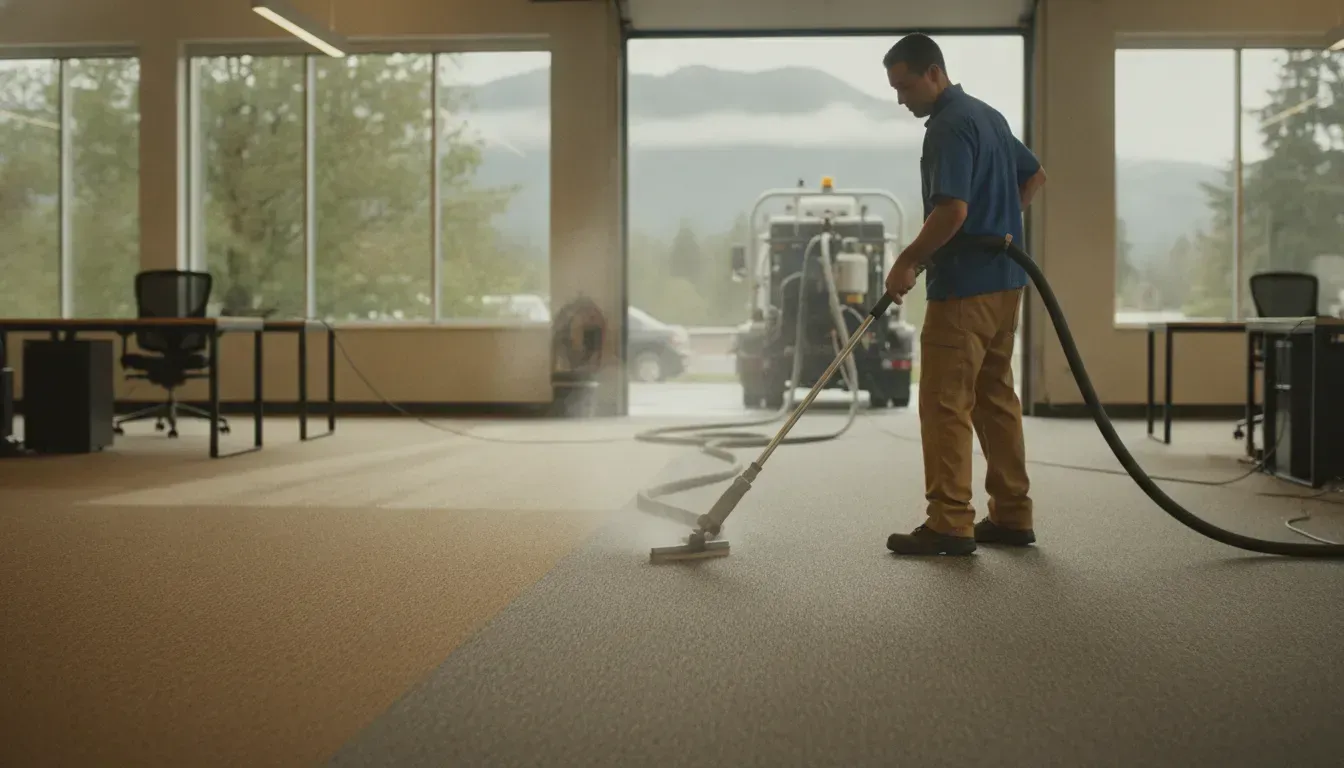
When comparing providers, ask what happens from inspection through final walk-through. Truck-mounted hot water extraction is a common commercial approach. It uses heated water and extraction power to flush and recover soil and cleaning solution. The provider should explain where this method fits your carpet system, rather than presenting it as the right answer for every floor.
A thoughtful process may include pre-inspection, careful vacuuming, appropriate solution application, and mechanical agitation when the carpet and soil conditions support it. Agitation helps distribute cleaning agents and loosen soil before extraction. It must still be selected with carpet construction, fiber, dyes, and wear in mind. Ask whether the technician will adjust the process for heavily trafficked corridors, offices, retail areas, apartment turns, or sensitive environments.
Extraction is only one part of the service. A commercial bid should explain how the crew controls moisture and supports drying after cleaning. Useful questions include:
- What extraction equipment and vacuum capacity will be used?
- How will technicians protect furniture, walls, transitions, and nearby flooring?
- What air movement or extraction fans will support drying?
- What site conditions could extend the expected drying period?
Tubro documents commercial-grade, truck-mounted hot water extraction equipment for large properties. Its operating notes also describe high-powered extraction fans, optimized water use, and post-cleaning air circulation. The company documents typical drying of 6 to 12 hours, but actual timing depends on humidity, ventilation, carpet construction, soil load, and the amount of moisture used. A responsible provider should set expectations without guaranteeing one result for every building.
Capacity matters when cleaning must happen between tenants or outside business hours. Ask how many technicians and machines will be assigned, how the crew handles multiple buildings, and whether the proposed schedule is realistic. Tubro documents more than 20 apartment units in 2 to 3 hours as an example of volume capability, not a universal promise.
For a closer look at the service scope, review Tubro's commercial carpet cleaning services. The right choice is equipment matched to the facility, a process explained in plain language, and a drying plan that protects your operations.
What Are the Red Flags When Comparing Commercial Carpet Cleaners?
Summary: A dependable commercial cleaner should make the work, price, credentials, timing, and communication easy to verify before you sign.
When learning how to choose commercial carpet cleaning company options, pay attention to what a provider will not explain. A polished website does not replace a clear scope of work and practical answers about your facility.
- Vague scope: The proposal does not identify the areas, carpet types, soil conditions, furniture handling, preparation, exclusions, or expected finish. Ask what is included and what would require a separate approval.
- Unclear pricing: The quote gives only a total without stating the measurement basis, minimum charge, add-on fees, access costs, or conditions that could change the price. A square-foot or project basis should be clear enough for you to compare bids fairly.
No proof of insurance or references: A provider avoids sharing current insurance information or relevant commercial references. Appropriate insurance and experience matter when technicians work around occupied offices, retail areas, apartments, or valuable contents. BBB also recommends evaluating a service before hiring to support quality service and fair pricing: review its hiring guidance.
Unrealistic drying or results promises: Be cautious when someone guarantees a fixed drying time or promises that every difficult spot or odor will disappear. Drying depends on carpet construction, moisture use, airflow, weather, and building conditions. A responsible provider explains those variables and sets realistic expectations.
Poor communication: Missed calls, inconsistent answers, and a representative who cannot explain the process often become service problems later. Commercial work needs a reliable contact for scheduling, access questions, and issue resolution.
Pressure to sign: A limited-time discount, refusal to provide a written proposal, or demand for immediate approval can prevent proper comparison. Take time to confirm the scope, service schedule, products, payment terms, and satisfaction policy.
These warning signs do not automatically prove that a company cannot perform good work. They indicate that you need more documentation or another bid before committing. Compare providers on verifiable details, not just the lowest number or strongest promise.
How Tubro Approaches Commercial Accounts
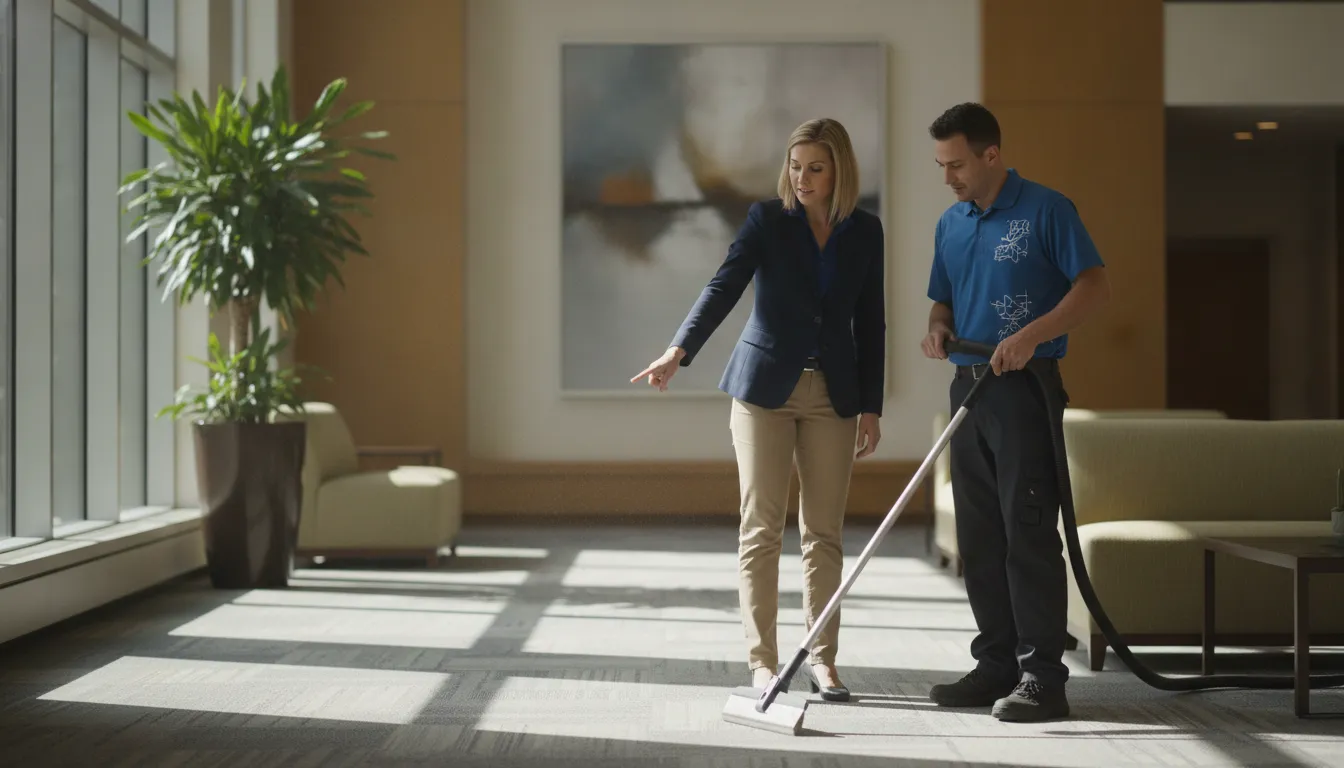 A commercial cleaning partner should make the work easier to plan, not create another coordination problem. Tubro Carpet Cleaning is locally owned and has operated since 2010. Its documented approach connects the practical details buyers compare: credentials, equipment, scheduling, pricing, drying expectations, and product selection.
Commercial account factors to review with TubroWhat to compareTubro's documented approachWhy it mattersLocal accountabilityLocally owned and operated in South King County and Pierce County. Commercial service covers offices, retail spaces, rentals, apartments, portfolios, and student housing.A local team can discuss site conditions and scheduling around the way your property operates.Credentials and equipmentTubro is documented as licensed, bonded, insured, and IICRC certified. Technicians use commercial-grade, truck-mounted hot water extraction equipment.Credentials and suitable equipment give buyers concrete questions to verify instead of relying on broad claims.Scheduling and dryingFlexible scheduling is intended to minimize business disruption. Tubro documents typical drying of 6 to 12 hours, depending on site conditions, with extraction fans and post-cleaning air circulation.Ask how access, ventilation, carpet construction, humidity, and cleaning scope may affect when spaces can reopen.Pricing and productsTubro documents upfront pricing and no hidden fees. Request a current written commercial quote because rates and minimums can change. Products are described as non-toxic and biodegradable, with options for sensitive environments.Request a written scope, confirm the current price basis, and identify products appropriate for occupied or sensitive spaces.
The pricing figures above come from Tubro's published commercial cost information and should be confirmed before work is scheduled. A written quote should clarify the areas included, preparation expectations, minimum charges, access requirements, and any conditions that could change the scope.
Tubro's truck-mounted hot water extraction process is designed for commercial properties, but no drying estimate applies equally to every building. A busy apartment turnover, an occupied office, and a retail space may need different timing and coordination. The right discussion focuses on your floor plan, traffic, access, operating hours, and reopening requirements.
For a closer look at equipment, service coverage, and the commercial scope, review Tubro's Commercial Carpet Cleaning for South King County Offices, Rentals, and Retail. The goal is not to promise that every difficult spot or odor will disappear. It is to set a realistic plan, document expectations, and give the property team a clear point of contact.
In summary, Tubro's commercial approach combines local accountability, commercial-grade extraction, flexible scheduling, written pricing, and realistic site-specific expectations.
Call Tubro Carpet Cleaning at (253) 499-1028 to discuss your commercial cleaning needs.
Frequently Asked Questions
How do I choose the right commercial carpet cleaner?
Compare more than price. Review the company's commercial experience, insurance, technician training, equipment, scheduling flexibility, written scope, and communication. Ask how the provider will handle access, furniture, drying, difficult spots, and any service concerns. A local company may also offer stronger accountability when your properties need recurring service.
What should be included in a commercial carpet cleaning quote?
A useful quote should explain the areas included, cleaning method, price basis, minimum charges, products, access requirements, scheduling, expected drying conditions, and follow-up policy. Request the scope in writing so you can compare proposals fairly and avoid surprises caused by vague exclusions or unclear assumptions.
Is IICRC certification important when hiring a commercial cleaner?
It is a useful training and process signal, but it is not a universal guarantee of results. Ask which technician will perform the work, how the technician evaluates carpet and building conditions. And how the company adapts its process for traffic levels, carpet construction, and operational constraints.
What are common problems with commercial carpet cleaning companies?
Common warning signs include an unusually vague scope, no proof of insurance, unclear pricing. Pressure to sign quickly, unrealistic promises about spots or drying, and poor communication before service. Be cautious when a provider cannot explain its equipment, products, scheduling plan, or process for resolving concerns.
How should a facility plan for carpet cleaning?
Coordinate access, furniture movement, occupant notifications, security requirements, and reopening expectations before the appointment. Confirm the provider's drying plan and identify areas that need priority attention. Planning these details early helps reduce disruption and gives the cleaning team a realistic service window.
Ready to Compare Commercial Carpet Cleaning Companies?
A clear conversation can help you match cleaning methods, scheduling, and service expectations to your facility's needs. Call Tubro Carpet Cleaning at (253) 499-1028 to discuss commercial carpet cleaning for your facility. We can help you identify the practical details to address before moving forward with a provider.